Plitvice Lakes Photography Guide: Best Spots, Settings & Tips (2026)
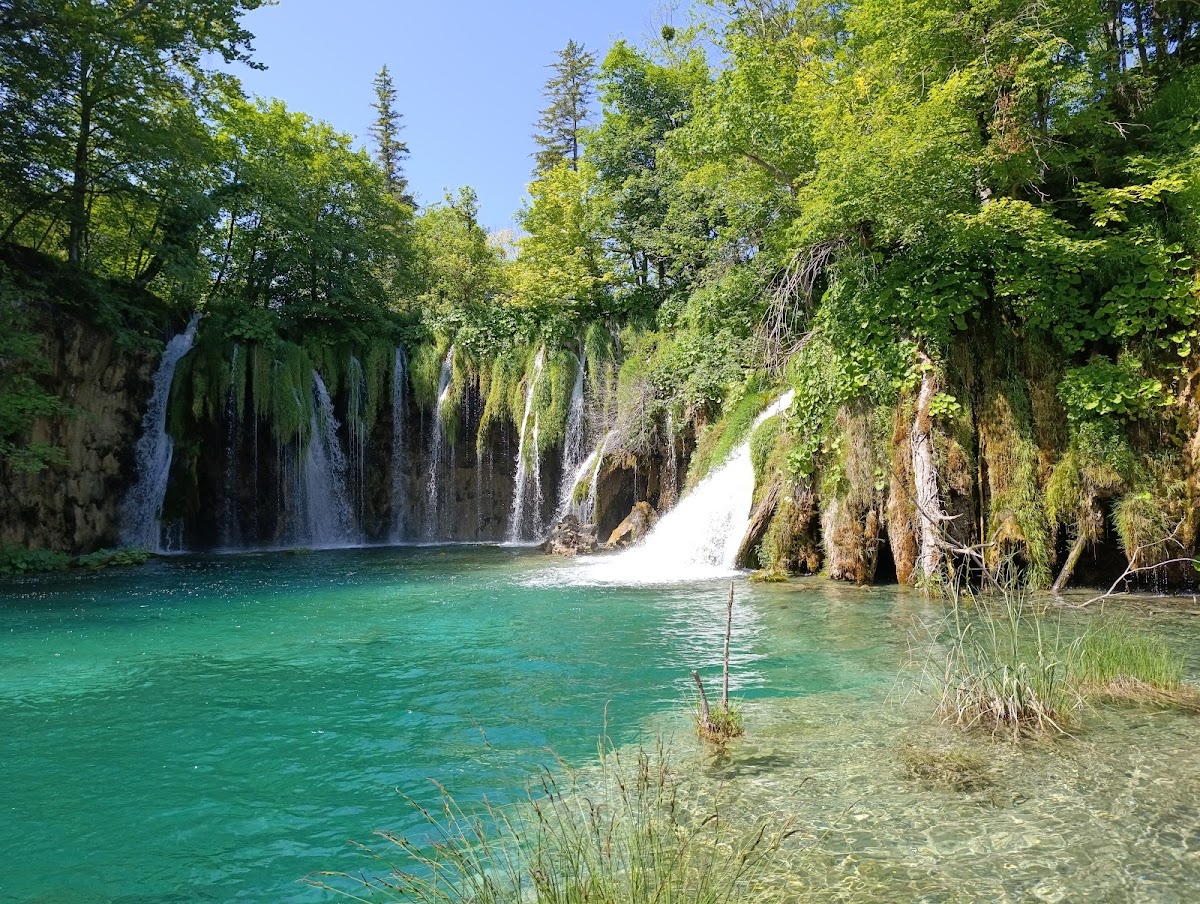
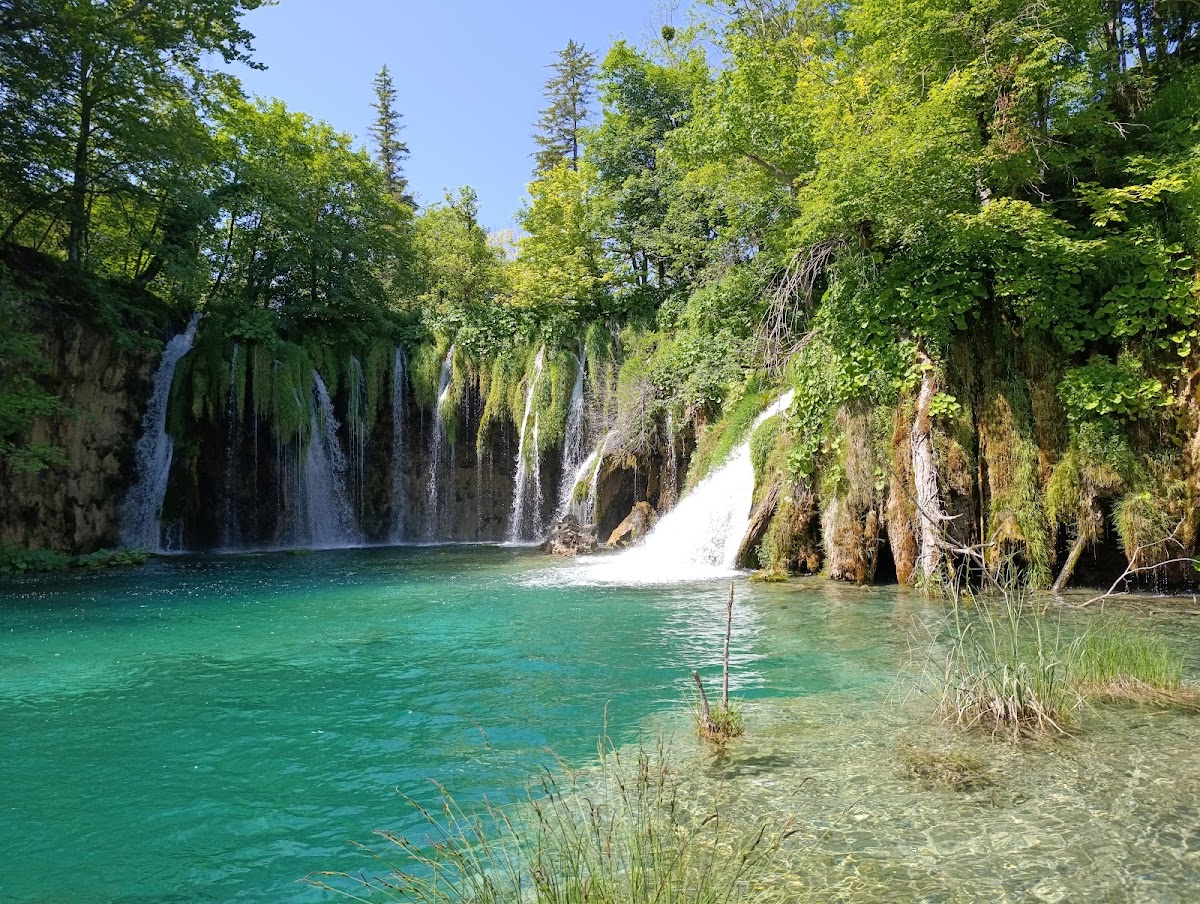
Plitvice Lakes National Park isn't just Croatia's most popular natural attraction — it's one of the most photogenic landscapes in all of Europe. Sixteen terraced lakes connected by over 90 waterfalls, draped in ancient beech and fir forest, shifting through impossible shades of turquoise, emerald, and cobalt depending on the light, the season, and the mineral content of the water. UNESCO recognized it in 1979, and photographers have been obsessing over it ever since.
What makes Plitvice extraordinary from a photographic perspective isn't just the headline scenery — it's the variety. Within a single day's shooting, you can capture the thundering 78-meter Veliki Slap through long exposure, frame intimate cascades threading through moss-covered travertine barriers, compose reflections on mirror-still lake surfaces, and shoot forest canopy light filtering down onto wooden boardwalks. The park offers wide-angle grandeur and intimate macro detail in equal measure.
But Plitvice rewards preparation. The park receives approximately 1.5 million visitors annually, the boardwalks vibrate with foot traffic (which affects your tripod), the deep canyons create challenging contrast ratios, and the best light happens at hours when most visitors haven't arrived yet. This guide covers everything — the exact spots, the right settings, the essential gear, and the seasonal timing — to help you come home with images that do this place justice.
Best Photography Spots
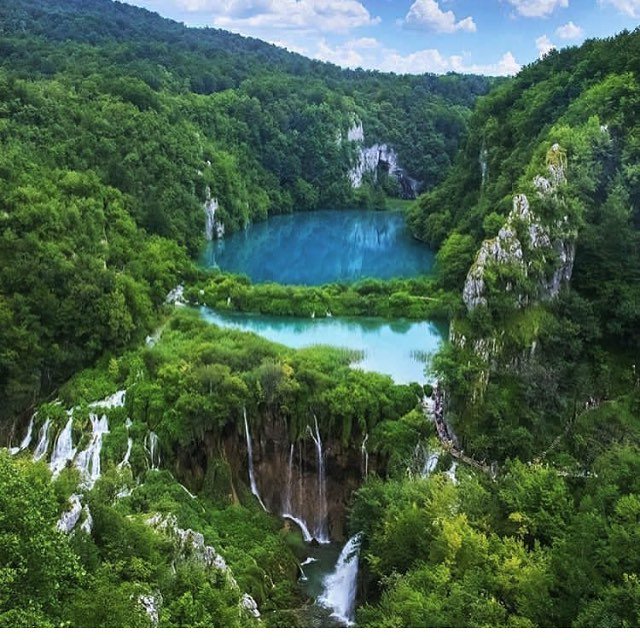
Plitvice Lakes stretches across two distinct zones — the Upper Lakes (Gornja jezera) and Lower Lakes (Donja jezera) — connected by Lake Kozjak, the park's largest body of water. Each zone offers completely different photographic character. The Upper Lakes sit in a broader, more open valley with gentler cascades and expansive views, while the Lower Lakes occupy a dramatic limestone canyon with towering cliffs and the park's most powerful waterfalls.
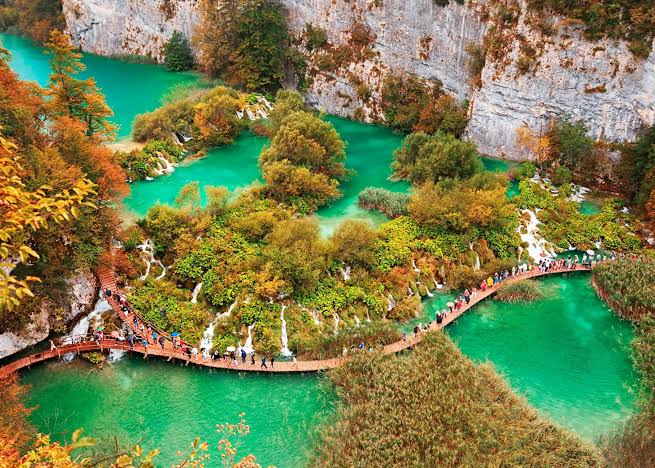
Veliki Slap (Great Waterfall)
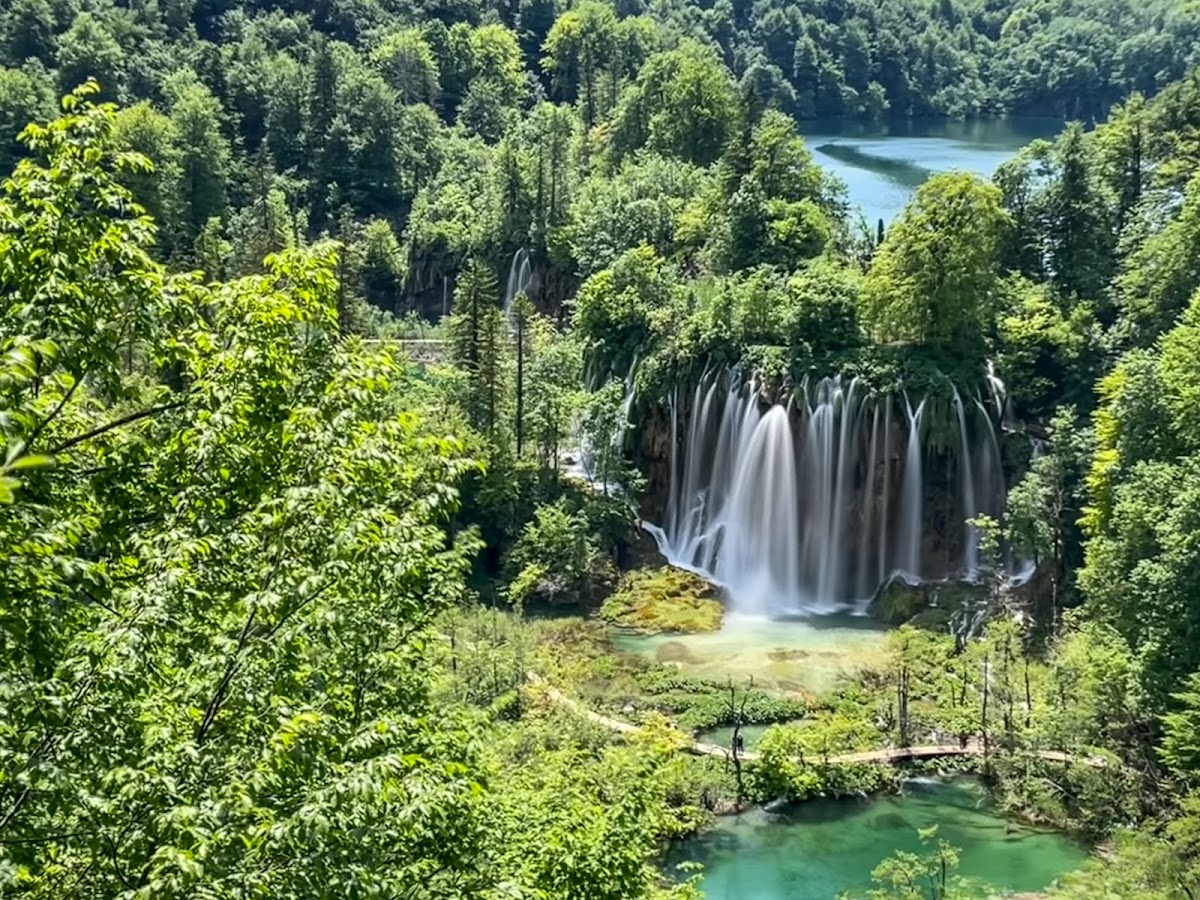
Croatia's tallest waterfall at 78 meters is the park's signature image, and for good reason. The sheer volume of water plunging off the cliff face — especially in spring — creates a genuinely awe-inspiring scene. You'll find it near Entrance 1, at the southernmost point of the Lower Lakes system.
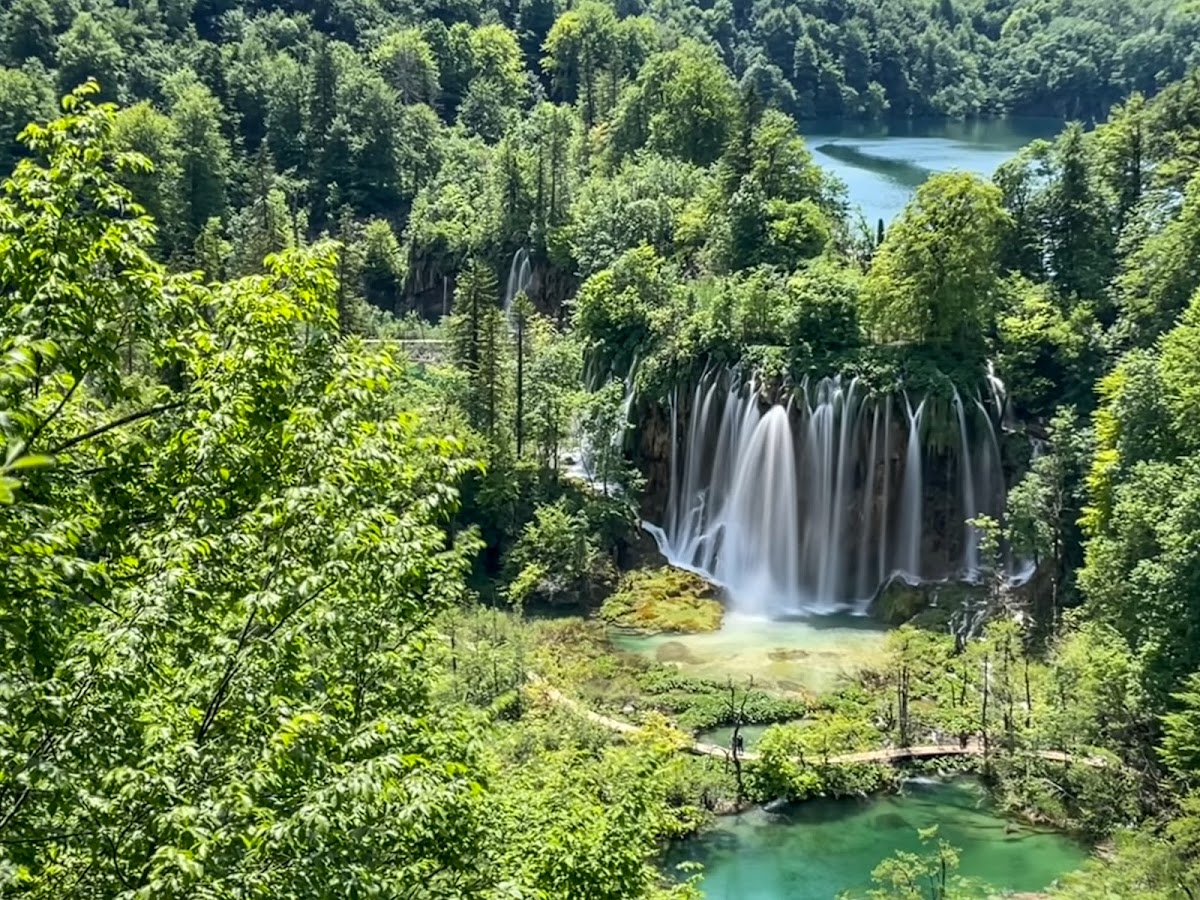
Best angles: The most dramatic front-on view comes from the boardwalk platform at the base, roughly 30 meters from the falls. From here you can shoot upward to emphasize the height, or step back to include the surrounding canyon walls for scale. For the famous "postcard view" — the elevated perspective looking down into the canyon with Veliki Slap in the background — walk approximately 50 meters along the main path from Entrance 1 toward viewpoint Vidikovac 1. This elevated angle captures the falls, the turquoise pool below, and the forested canyon walls in a single frame.
Accessibility: Easy access from Entrance 1 via a well-maintained path. The base viewpoint requires descending stairs — roughly 150 steps down into the canyon. Expect this to be the most crowded spot in the entire park, particularly between 10:00 AM and 3:00 PM.
Photo tip: Veliki Slap faces roughly north, meaning it's in shadow for much of the day. This is actually advantageous — the even, diffused light reduces harsh contrasts and makes long exposures far easier. If you want direct light hitting the falls, visit in midsummer during early morning or late afternoon when the sun angle is extreme enough to reach into the canyon.
Lower Lakes Canyon Boardwalks
The Lower Lakes (Donja jezera) are the most photographically dense section of the park. A network of wooden boardwalks winds through a narrow limestone canyon, passing directly over, beside, and between cascading waterfalls and pools of impossibly clear water. The four lakes here — Milanovac, Gavanovac, Kaluđerovac, and Novakovića Brod — are connected by dozens of waterfalls ranging from gentle curtain falls to powerful multi-tiered cascades.
Best angles: The boardwalk junction near the end of Lake Milanovac offers a natural fork where two paths diverge — this is a superb composition point, with the wooden walkway leading the eye into the scene and water flowing beneath. Along the canyon between Milanovac and Gavanovac, the boardwalks pass through a section where cascades tumble from both sides simultaneously, creating an immersive 360-degree water landscape. Shoot from boardwalk level with a wide-angle lens to capture the leading lines of the walkway cutting through the water.
Accessibility: Flat boardwalk walking throughout, but the paths are narrow — often only 1 to 1.5 meters wide. During peak hours, the flow of foot traffic makes it nearly impossible to stop and set up a tripod without blocking other visitors. This is the primary reason to arrive at park opening.
Photo tip: The canyon orientation means the Lower Lakes are best photographed in overcast conditions or on days with high, thin cloud cover. Direct midday sun creates extreme contrast between the bright water surface and the deeply shadowed canyon walls — a nightmare for dynamic range. Overcast days deliver soft, even illumination with richly saturated color in the water and moss. If you're shooting on a sunny day, the late afternoon hours (after 4:00 PM in summer) work best, when the entire canyon floor is uniformly shaded.
Lake Kozjak Viewpoints
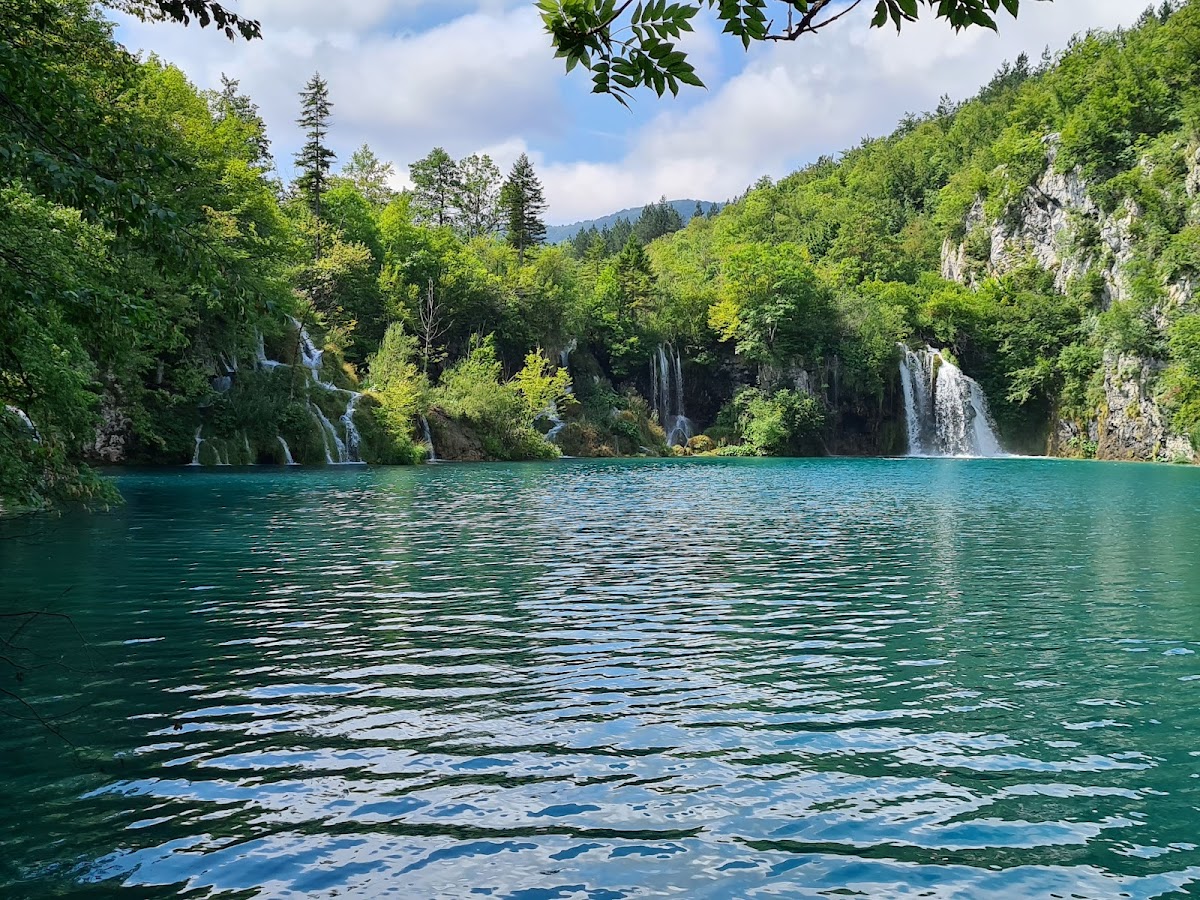
Kozjak is the park's largest lake — 81.5 hectares of serene, mirror-flat water connecting the Upper and Lower lake systems. Its scale provides a completely different photographic character from the intimate cascades elsewhere. This is where you go for sweeping reflections, minimalist compositions, and a sense of space.
Best angles: The electric boat crossing offers constantly shifting perspectives, but you're limited by the boat's schedule and can't stop for compositions. For controlled shooting, the western shoreline path between boat stations P1 and P2 provides elevated viewpoints looking east across the lake toward forested hills. Early morning, when the water is glass-calm and mist hovers over the surface, is the magic hour here. For a more intimate Kozjak composition, explore the southern inlet near boat station P1, where shallow water reveals the travertine lake bed in stunning detail.
Accessibility: Reached via the electric boat or on foot along marked trails. The western shore path involves moderate elevation gain over forest terrain — comfortable hiking shoes recommended.
Photo tip: Kozjak's size means wind ripples are common, especially in the afternoon. For mirror reflections, shoot in the first two hours after sunrise when the air is still. A polarizing filter is particularly effective here — rotate it to either maximize or eliminate reflections depending on the composition you want.
Sastavci Waterfall
Sastavci is where the Lower Lakes system meets the Korana River — multiple waterfalls converging into a single dramatic pool at the canyon's base. This is one of the most photographed spots in all of Croatia, and the wide cascade format makes it ideal for panoramic compositions.
Best angles: The classic Sastavci viewpoint is reached via the trail descending from near Entrance 1, offering an elevated side-on perspective that captures the full width of the multi-stream cascade. For a more dramatic close-up, descend to the lower boardwalk where spray from the falls creates natural atmosphere in your images. The bridge crossing near the base provides a unique eye-level composition with the cascades framing both sides.
Accessibility: Reached from Entrance 1 via a short (10–15 minute) walk with moderate stairs. Can be combined with Veliki Slap in a single shooting session as they're within 200 meters of each other.
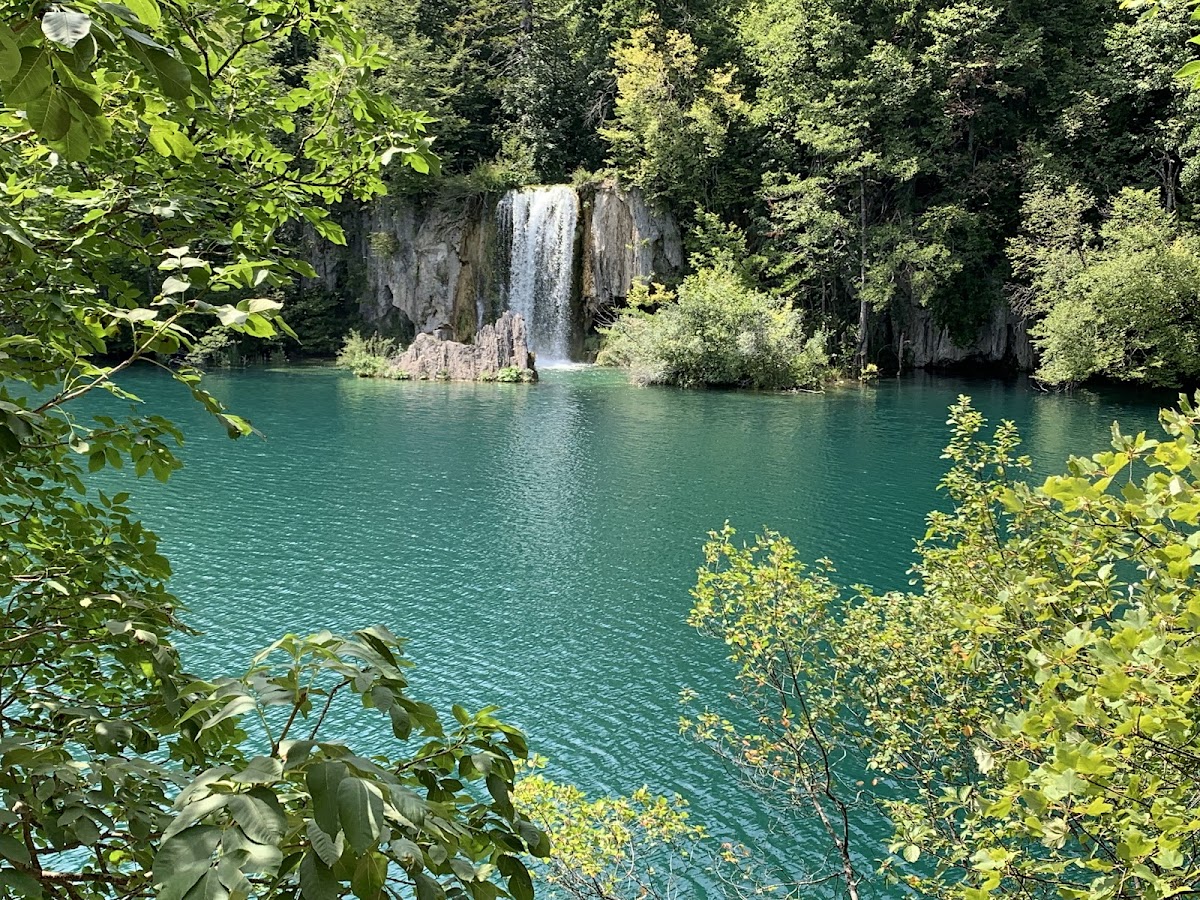
Photo tip: Sastavci's wide cascade is perfect for practicing long-exposure technique. The multiple water streams at varying speeds create beautiful layered silk effects at shutter speeds between 0.5 and 2 seconds. Use an ND filter to achieve these speeds even in daylight.
Upper Lakes Cascades
The Upper Lakes (Gornja jezera) encompass 12 lakes in a wider, more open valley. The terrain here is gentler, the cascades smaller and more numerous, and the surrounding forest creates a lush, intimate atmosphere. The section between Lake Galovac and Lake Gradinsko is the photographic highlight — a stretch of boardwalk passing through an area absolutely packed with small waterfalls, cascading streams, and crystal-clear pools.
Best angles: The boardwalks between Galovac and Gradinsko wind directly through the cascades, offering shoot-in-every-direction versatility. Look for compositions where the wooden boardwalk leads the eye through the water landscape. The travertine barriers between the Upper Lakes create natural terracing that's photogenic from above — look for elevated viewpoints along the trail where you can see multiple lake levels in a single frame. Lake Prošćansko, the highest and most remote of the Upper Lakes, offers solitude and pristine reflections for those willing to walk the extra distance.
Accessibility: Reached most efficiently from Entrance 2 or via the electric boat across Kozjak. The boardwalks are flat and well-maintained. This area is generally less crowded than the Lower Lakes, particularly on the stretch beyond Gradinsko heading toward Prošćansko.
Photo tip: The Upper Lakes' more open setting means morning mist is a real possibility, especially in autumn. The mist tends to hover just above the water surface at sunrise, creating ethereal, dreamlike compositions. Be at the Upper Lakes boardwalks before the mist burns off — typically within 90 minutes of sunrise.
Hidden Gems
The Secret Viewpoint near Veliki Slap: About 200 meters along the road from Entrance 1 toward the bus stop ST1, a steep unmarked path drops down to a concealed viewpoint overlooking the Lower Lakes canyon. This elevated perspective captures a sweeping vista of the canyon, boardwalks, and waterfalls from an angle most visitors never see. The path is steep and can be slippery — proceed carefully.
Čorkova Uvala Forest Trail: This ancient beech-fir forest on the park's western edge is one of the oldest primeval forests in Europe. While it doesn't feature lakes or waterfalls, the cathedral-like canopy and moss-covered forest floor offer exceptional woodland photography. The trail is rarely crowded and provides a welcome contrast to the water-focused shots elsewhere.
Burgeti Springs Area: Located in the southern part of the Upper Lakes system, this area features small springs bubbling up through the lake bed, creating fascinating circular patterns in the clear water. Perfect for abstract and detail-oriented photography.
Electric Boat Crossing: Don't overlook the boat ride itself as a photographic opportunity. The crossing of Lake Kozjak takes roughly 20 minutes and offers unique perspectives of the shoreline, reflections, and surrounding peaks that aren't available from any trail.
Photography by Season
Plitvice transforms so dramatically across the seasons that it functions as four entirely different photography destinations within a single location. Understanding the seasonal character is essential for planning a photography trip that delivers the images you're envisioning.
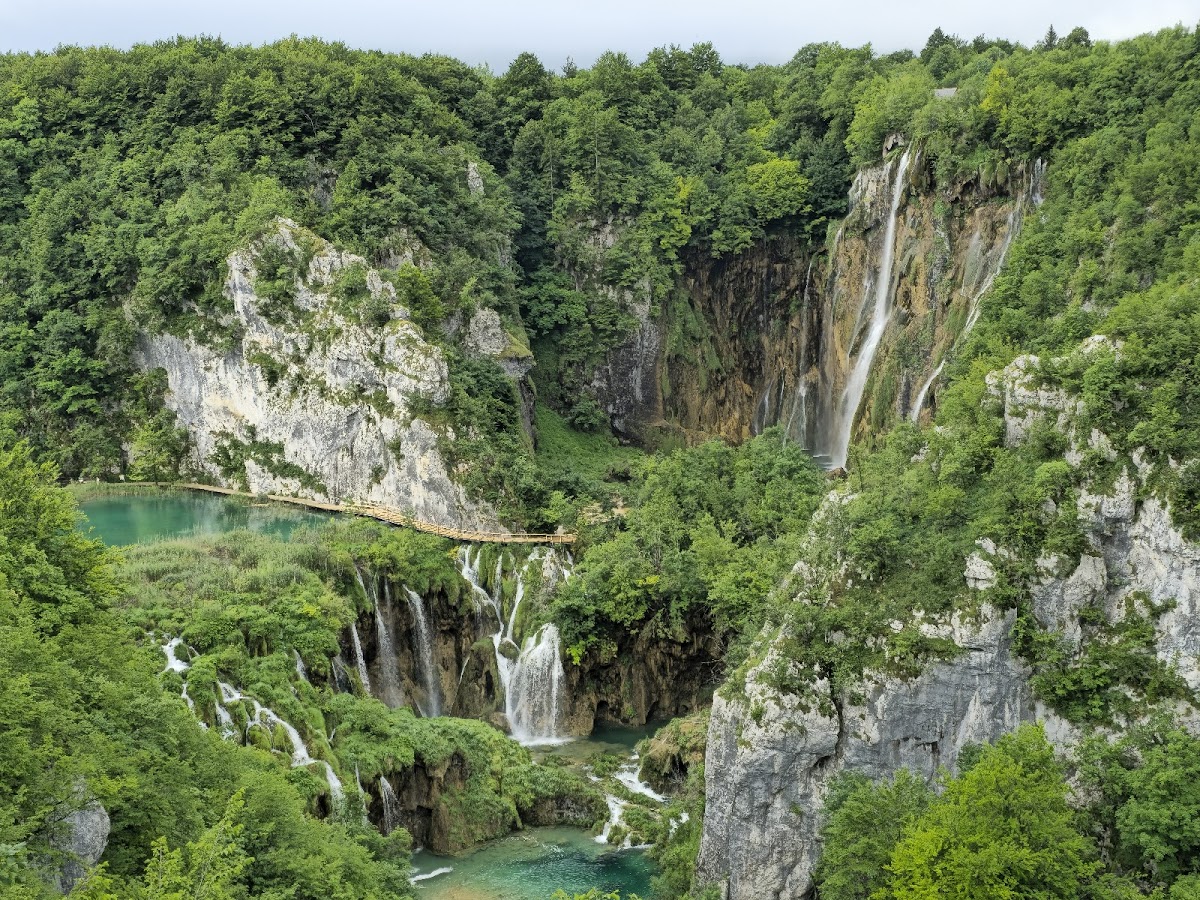
Spring (April – May)
Spring is the power season. Snowmelt from the surrounding Dinaric Alps floods the park, pushing water flow to its maximum levels. Waterfalls that trickle gently in late summer become thundering torrents. Veliki Slap is at its most dramatic, the countless small cascades between the Upper Lakes run at full volume, and even temporary waterfalls appear along the canyon walls that don't exist the rest of the year.
The vegetation is fresh and vibrantly green — new beech leaves glow almost fluorescent in backlight, and wildflowers carpet the forest floor and meadows surrounding the park. Orchids, crocuses, and buttercups add pops of color. Water levels in the lakes are at their highest, and the turquoise color is particularly vivid against the bright green surroundings. Light conditions are variable — expect a mix of overcast days (ideal for waterfall photography) and dramatic spring storms with fast-moving clouds.
Best months: Late April through late May. May is the sweet spot — water flow is near peak, vegetation is fully developed, temperatures are comfortable (12°C–22°C), and summer crowds haven't arrived yet.
Summer (June – August)
Summer brings the longest days, the warmest temperatures, and unfortunately the heaviest crowds. From a pure photography standpoint, the intense midday sun creates difficult contrast — the canyon walls throw deep shadows while the water surfaces blow out in direct light. However, the early morning and late evening hours are spectacular, with golden light raking across the treetops and warm tones reflected in the lakes.
The lush canopy is at full density, creating beautiful dappled light patterns on the boardwalks and water surfaces. Water flow decreases through the summer, especially in July and August, reducing waterfall drama but revealing more of the travertine structures. The lakes turn their deepest, most intense blue-green as lower water levels concentrate the dissolved minerals. Daylight hours are long — sunrise as early as 5:11 AM and sunset as late as 8:49 PM in late June — giving you ample time for golden-hour shooting at both ends of the day.
Best months: Early June offers a balance between spring's water flow and summer's warmth and greenery. If you must visit in July or August, commit to early morning starts (before 7:00 AM) and late afternoon returns (after 5:00 PM).
Autumn (October – November)
Autumn is the photographer's season. The beech forests ignite in golds, oranges, and deep reds, and these warm tones reflect in the still lake surfaces, creating doubled compositions of extraordinary richness. Peak foliage typically arrives in mid-October, though the timing varies by a week or two depending on the year.
Early mornings in autumn often bring mist hovering over the lake surfaces — a landscape photographer's dream. The lower sun angle throughout the day creates longer shadows, warmer light, and more three-dimensional rendering of the terrain. Water levels are moderate, waterfalls are still flowing, and crowds drop significantly from summer peaks. The combination of warm foliage, mist, and long golden light makes October arguably the single best month for serious photography at Plitvice.
Mushrooms and fungi appear on fallen logs and forest floors — excellent subjects for macro photography. Fallen leaves swirling in eddies and caught on travertine edges add seasonal detail to waterfall compositions.
Best months: Early to mid-October for peak foliage. Late October and November bring starker, moodier conditions — bare branches, fog, and atmospheric conditions suited to fine-art landscape work.
Winter (December – March)
Winter photography at Plitvice is extraordinary but demanding. When temperatures drop sufficiently, the waterfalls freeze into spectacular ice formations — translucent curtains of ice draped over the cliff faces, icicles hanging from the travertine barriers, and entire cascade sections locked in sculptural stillness. Snow blankets the forests and boardwalks, and the lakes may develop partial ice cover along their edges, creating beautiful contrast between the turquoise water and white ice.
The crowds essentially vanish — on a winter weekday, you may have entire lake sections to yourself. The light is low, warm-toned, and rakes across the landscape at extreme angles even at midday, adding drama and depth. However, some boardwalk sections close for safety due to ice, daylight hours are short (sunrise around 7:30 AM, sunset by 4:30 PM), and temperatures range from -5°C to 5°C. The electric boat and panoramic train operate on reduced schedules.
Best months: January and February for the best chance of frozen waterfalls and snow coverage. A fresh snowfall followed by a clear, cold morning is the holy grail.
Time of Day Guide
Light is everything in landscape photography, and Plitvice's canyon geography makes timing even more critical than usual. The deep Lower Lakes canyon and surrounding forest canopy create constantly shifting light conditions throughout the day.
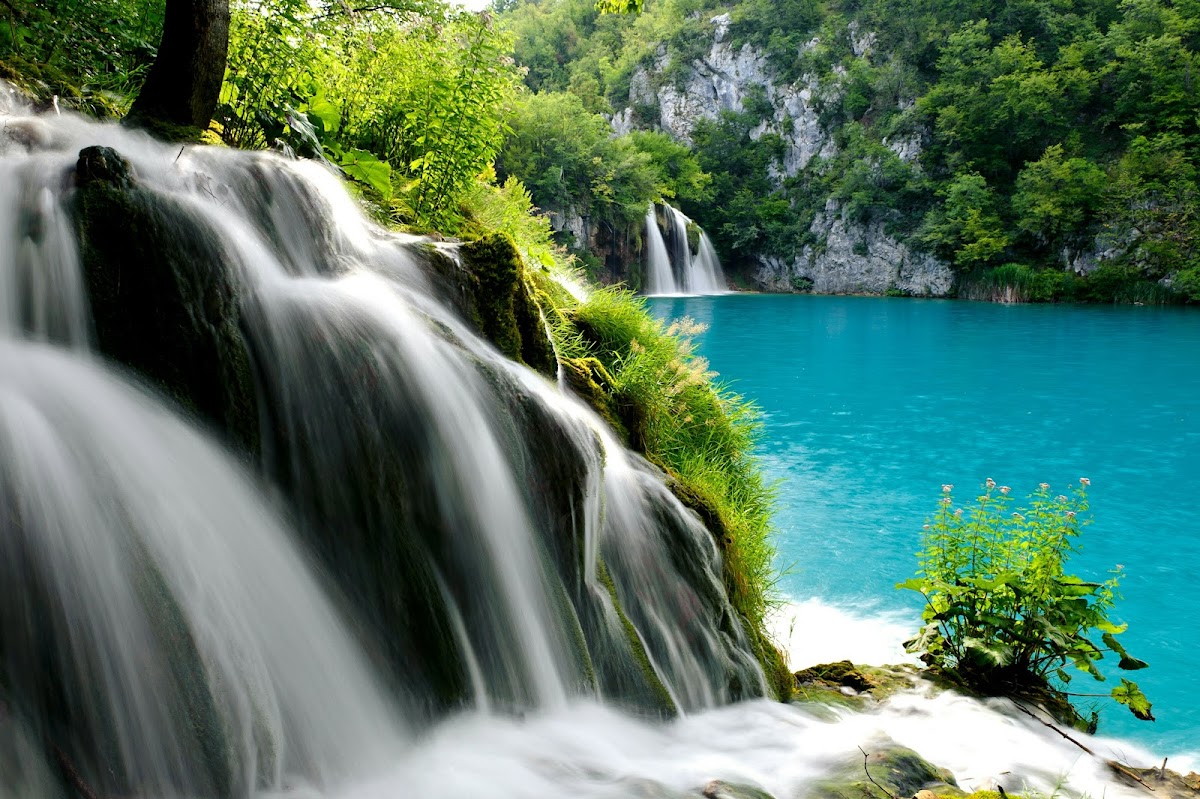
Golden Hour
Golden hour at Plitvice varies dramatically by season:
| Season | Sunrise | Sunset | Golden Hour Length |
|---|---|---|---|
| Summer (June) | ~5:15 AM | ~8:45 PM | 45–60 min each |
| Autumn (October) | ~7:00 AM | ~6:15 PM | 30–45 min each |
| Winter (January) | ~7:30 AM | ~4:30 PM | 20–30 min each |
| Spring (April) | ~6:15 AM | ~7:45 PM | 30–45 min each |
The Upper Lakes, sitting in a more open valley, receive golden light more effectively than the deep Lower Lakes canyon. Plan your golden hour sessions at Lake Kozjak, the Upper Lakes between Galovac and Gradinsko, or the elevated viewpoints near Entrance 1.
Sunrise vs. Sunset Locations
For sunrise: Head to the Upper Lakes. The eastward-facing valley catches early morning light beautifully, and the calm morning air means glass-still water for reflections. The first boat across Kozjak in autumn roughly coincides with sunrise. Lake Kozjak's eastern shore glows in warm morning light while the western shore provides shadow for contrast.
For sunset: The elevated viewpoints near Entrance 1 face roughly westward and catch the last warm light. The postcard viewpoint over the Lower Lakes canyon is particularly effective at sunset when the warm light illuminates the far canyon wall while the foreground remains in blue shadow — a beautiful warm-cool contrast. Lake Prošćansko in the Upper Lakes also catches sunset light effectively.
Midday Challenges & Solutions
Between 10:00 AM and 3:00 PM, the sun creates harsh contrasts in the canyons — blown-out highlights on water surfaces and deep shadows on canyon walls. This is also when crowds peak. Rather than fighting these conditions, use midday strategically:
- Shoot the forest trails — the canopy filters the harsh light into beautiful dappled patterns
- Focus on details and macro — moss, ferns, mushrooms, travertine textures, insects on flowers
- Use overcast midday hours for long-exposure waterfall work — flat light is your friend here
- Explore the deeper canyon sections where the cliffs block direct sun entirely, creating naturally soft illumination
Blue Hour Opportunities
The 30–40 minutes before sunrise and after sunset offer blue hour — a cool, even light that renders the turquoise water with extraordinary saturation. Blue hour at Plitvice is particularly effective at Lake Kozjak, where the still water reflects the deep blue sky. The Lower Lakes canyon retains blue-hour conditions for longer than the open areas, since the canyon walls block the residual sunlight. If you have a tripod and a fast wide-angle lens, blue hour long exposures of the lakes produce the most intensely colored water images possible at Plitvice.
Equipment Recommendations
Essential Gear
Camera body: Any interchangeable-lens camera — full-frame, APS-C, or Micro Four Thirds — will produce excellent results at Plitvice. The key capability is manual exposure control and the ability to shoot at low ISOs (100–200) for clean long exposures. Weather sealing is a strong advantage given Plitvice's frequent rain.
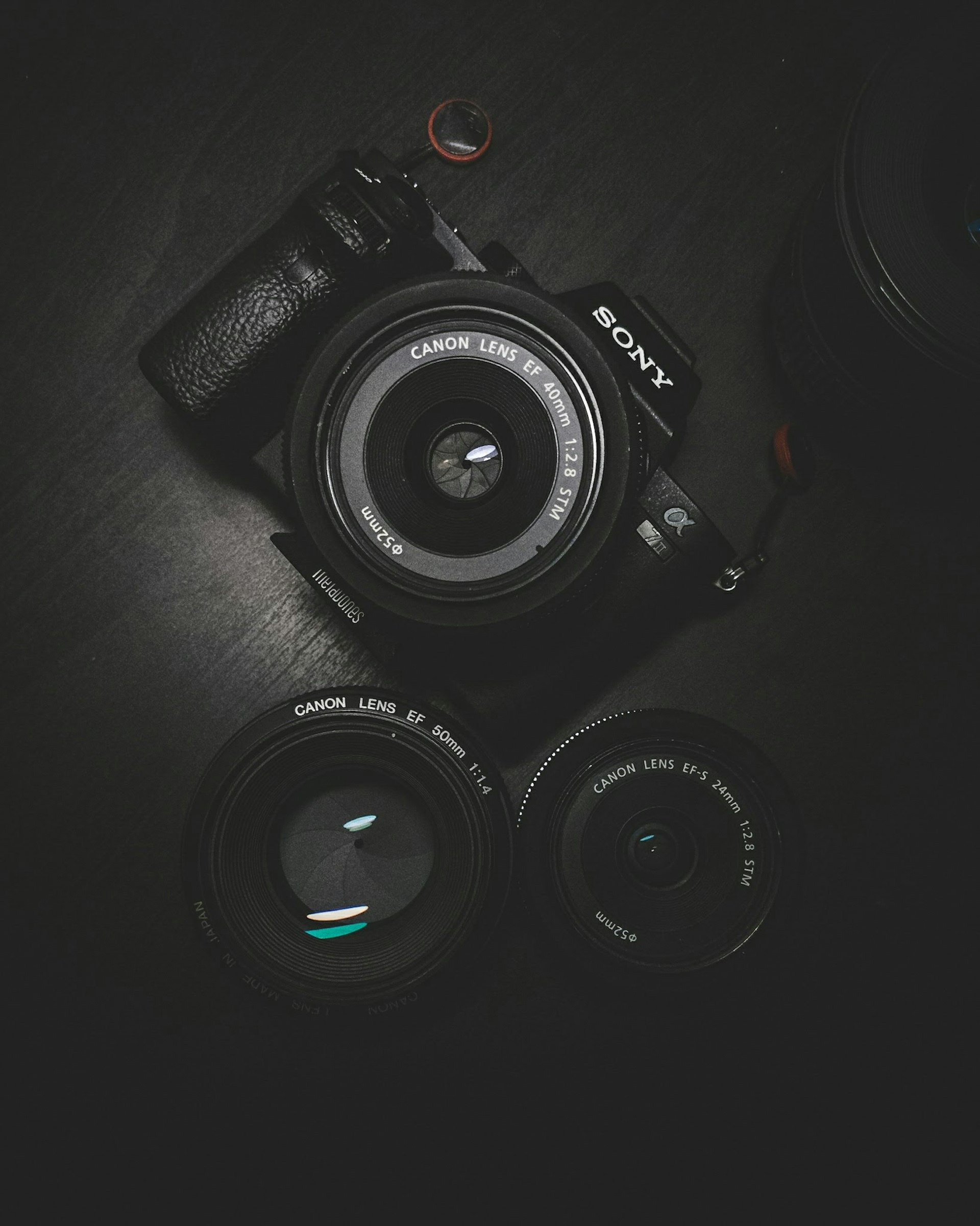
Wide-angle lens (16–35mm equivalent): Your primary lens. The canyon boardwalks, cascading waterfalls, and sweeping lake views all demand wide coverage. A 16–35mm f/4 or similar is ideal. You'll use this for 70% of your shots.
Mid-range zoom (24–70mm or 24–105mm equivalent): Versatile for isolating specific cascades, framing boardwalk compositions, and medium-distance lake shots. If you can only bring one lens, a 24–105mm covers the widest practical range.
Telephoto (70–200mm equivalent): Useful for compressing distant waterfalls, isolating details in the canyon walls, and capturing wildlife. Not essential, but valuable if you have the weight budget.
Tripod: Non-negotiable for serious landscape work at Plitvice. Choose a sturdy model — the boardwalks vibrate significantly when other visitors walk past, and a flimsy tripod will transmit those vibrations into blurred exposures. Carbon fiber models dampen vibration better than aluminum. Keep in mind the tripod legs need to fit on narrow boardwalk sections (often 1–1.5 meters wide) without blocking foot traffic.
Filters
Circular polarizer: The single most important filter for Plitvice. It removes glare from water surfaces (revealing the turquoise depths and submerged travertine), reduces reflections on wet foliage, and boosts overall color saturation. It also cuts 1–2 stops of light, helping with long exposures. Keep it on your lens for nearly every shot.
ND filter (3-stop or 6-stop): Essential for achieving silky-smooth waterfall effects during daylight hours. A 6-stop ND lets you shoot 1–4 second exposures even in bright conditions. A variable ND filter offers flexibility but may introduce color casts — a fixed-strength ND from a reputable brand is more reliable.
Graduated ND filter: Less essential if you shoot HDR brackets, but useful for balancing the bright sky against the darker canyon floor in a single exposure.
Weather Protection
Plitvice sees rain year-round, and waterfall spray is constant near the cascades. Carry a rain cover for your camera (a simple plastic bag with a hole for the lens works in a pinch), a lens cloth for clearing spray droplets, and a waterproof bag for your gear during transit. In winter, keep spare batteries warm in an inner pocket — cold temperatures drain lithium-ion batteries rapidly.
What NOT to Bring
Drones: Strictly prohibited in the national park. Signage throughout the park makes this clear, and fines are enforced. Don't risk it.
Monopods with spike tips: The boardwalk surfaces are wooden and can be damaged by metal spike tips. Use rubber feet.
Excessively large gear bags: The boardwalk paths are narrow, and a large backpack makes you a hazard to other visitors and to yourself near wet edges. A compact, purpose-built camera bag is far more practical than a full expedition pack.
Camera Settings & Techniques
Long Exposure for Waterfalls
The silky-smooth waterfall effect is the signature look of Plitvice photography, and getting it right requires understanding the relationship between shutter speed and water movement.
Shutter speed: Start at 0.5 seconds and adjust from there. For small, gentle cascades, 0.3–0.8 seconds preserves some texture while smoothing the flow. For powerful waterfalls like Veliki Slap, 1–4 seconds creates the classic silk effect. Exposures longer than 8 seconds risk over-smoothing the water into a featureless white blur — you want movement, not erasure.
Aperture: f/8 to f/11 provides the sharpest results on most lenses and sufficient depth of field for landscape work. Avoid f/16 or smaller — diffraction softens the image and you rarely need that much depth of field.
ISO: Set to your camera's base ISO — typically 100 or 64. This maximizes dynamic range and minimizes noise, both critical for long exposures.
Setup: Lock your tripod firmly, use a remote release or your camera's 2-second timer to avoid shake, and enable mirror lock-up on DSLRs. If the boardwalk is vibrating from foot traffic, wait for a gap between visitors or try early-morning shooting when the boardwalks are empty.
HDR for High-Contrast Scenes
The canyon environment creates extreme dynamic range — bright water surfaces and sky against deep shadow in the cliffs and forest canopy. Bracket your exposures at ±2 EV (three shots: -2, 0, +2) to capture full detail in both highlights and shadows. Modern cameras with 14+ stops of dynamic range can often recover sufficient detail from a single raw file, but in the most extreme cases — direct sunlight on water with deep canyon shadow — HDR bracketing is the safest approach.
Shoot brackets on a tripod in aperture priority mode with auto-bracketing enabled. Merge in post-processing using Lightroom's HDR merge, Photomatix, or Luminosity masks in Photoshop for the most natural results. Avoid over-cooked HDR — the goal is natural-looking detail recovery, not the surreal HDR effect that screams "processed."
Focus Stacking
For compositions that include foreground elements (boardwalk, rocks, or foliage) close to the camera with distant waterfalls or lakes, a single shot at f/8 may not hold everything sharp. Focus stacking — taking multiple exposures focused at different distances and combining them in post — solves this without resorting to tiny apertures.
Take 3–5 shots, shifting the focus point from near to far, keeping all other settings constant. Merge in Photoshop (Edit > Auto-Align Layers, then Edit > Auto-Blend Layers) or use dedicated stacking software like Helicon Focus. This technique is particularly effective for the boardwalk compositions where the wooden walkway leads from immediate foreground deep into the scene.
Motion Blur vs. Frozen Water
Not every waterfall shot needs to be silky smooth. A faster shutter speed of 1/250 to 1/500 freezes individual water droplets, creating a dynamic, energetic image that conveys power — particularly effective at Veliki Slap when water volume is high. The choice between motion blur and frozen water is an artistic one:
- Silky/smooth (0.5–4 sec): Dreamy, serene, timeless. Works best with smaller cascades and gentle flows.
- Partially blurred (1/15–1/4 sec): Retains water texture while showing movement. Often the most natural-looking option.
- Frozen (1/250+ sec): Powerful, dramatic, energetic. Best for large-volume falls and dramatic spray.
Experiment with multiple shutter speeds at each location. The same waterfall can yield three completely different images depending on how you handle the water motion.
Practical Photography Tips
Crowds & Timing
Crowds are the biggest practical challenge for photography at Plitvice. The park receives up to 10,000 visitors on peak summer days, and the narrow boardwalks make it nearly impossible to set up a tripod or compose carefully when traffic is heavy.
Beat the crowds: Arrive at whichever entrance you're using the moment it opens. In summer, that's 7:00 AM. In shoulder season, 8:00 AM. The first 60–90 minutes of the day — before the tour buses arrive — are your golden window for crowd-free shooting. Most organized tour groups arrive between 10:00 AM and 11:00 AM, so completing your priority shots before then is essential.
Afternoon return: The tour buses typically depart by 4:00–5:00 PM. Return to key spots in the late afternoon for a second, quieter shooting session.
Two-day strategy: Dedicate day one to the Lower Lakes and Veliki Slap (arrive at Entrance 1 at opening), and day two to the Upper Lakes and Kozjak (arrive at Entrance 2 at opening). This way you see every major location at its least crowded.
Tripod Rules & Restrictions
Personal photography — including tripod use — is permitted throughout the park without any special permit. However, there are practical constraints. The boardwalk paths are narrow, and park regulations require you to keep paths clear for other visitors. Set up your tripod during quiet moments when no one is passing, and be prepared to collapse it quickly if a group approaches. Early mornings and late afternoons are when tripod work is genuinely feasible.
Be aware that the wooden boardwalks transmit vibrations from foot traffic over surprising distances. Even a single person walking 10 meters away can introduce subtle blur at shutter speeds between 1/4 and 2 seconds. Either wait for a complete gap in traffic or use your camera's electronic first curtain shutter and IBIS to mitigate vibration.
Weather Considerations
Plitvice sits in a mountainous microclimate where weather changes rapidly. A sunny morning can turn to rain within an hour, and vice versa. Always carry rain protection for your gear, and remember: overcast conditions are actually better than sunshine for waterfall and canyon photography. The soft, diffused light eliminates harsh shadows, saturates colors, and makes long exposures easier. Don't be disappointed by clouds — embrace them.
In autumn and winter, check the forecast for fog. Fog at Plitvice creates some of the most atmospheric photography opportunities in all of Croatia — misty waterfalls, forests dissolving into soft grey, and lakes appearing to float in space.
Photography Permits & Park Rules
Personal photography: No permit required. Shoot freely with any equipment you bring.
Commercial photography: Requires written permission submitted at least 20 days in advance to the park administration (zahtjev@np-plitvicka-jezera.hr). Commercial rates apply — €130 for a full day of still photography, plus a €20/hour ranger escort fee.
Absolute rules: You must stay on marked trails at all times. Walking on the travertine barriers is strictly forbidden — they are living geological formations, and foot traffic damages them. Never pick plants, disturb wildlife, or use intensive artificial lighting. The park's mission is conservation first, and photographers are expected to lead by example.
Post-Processing Tips
Plitvice images benefit from careful, restrained post-processing that enhances the natural beauty without making images look artificial.
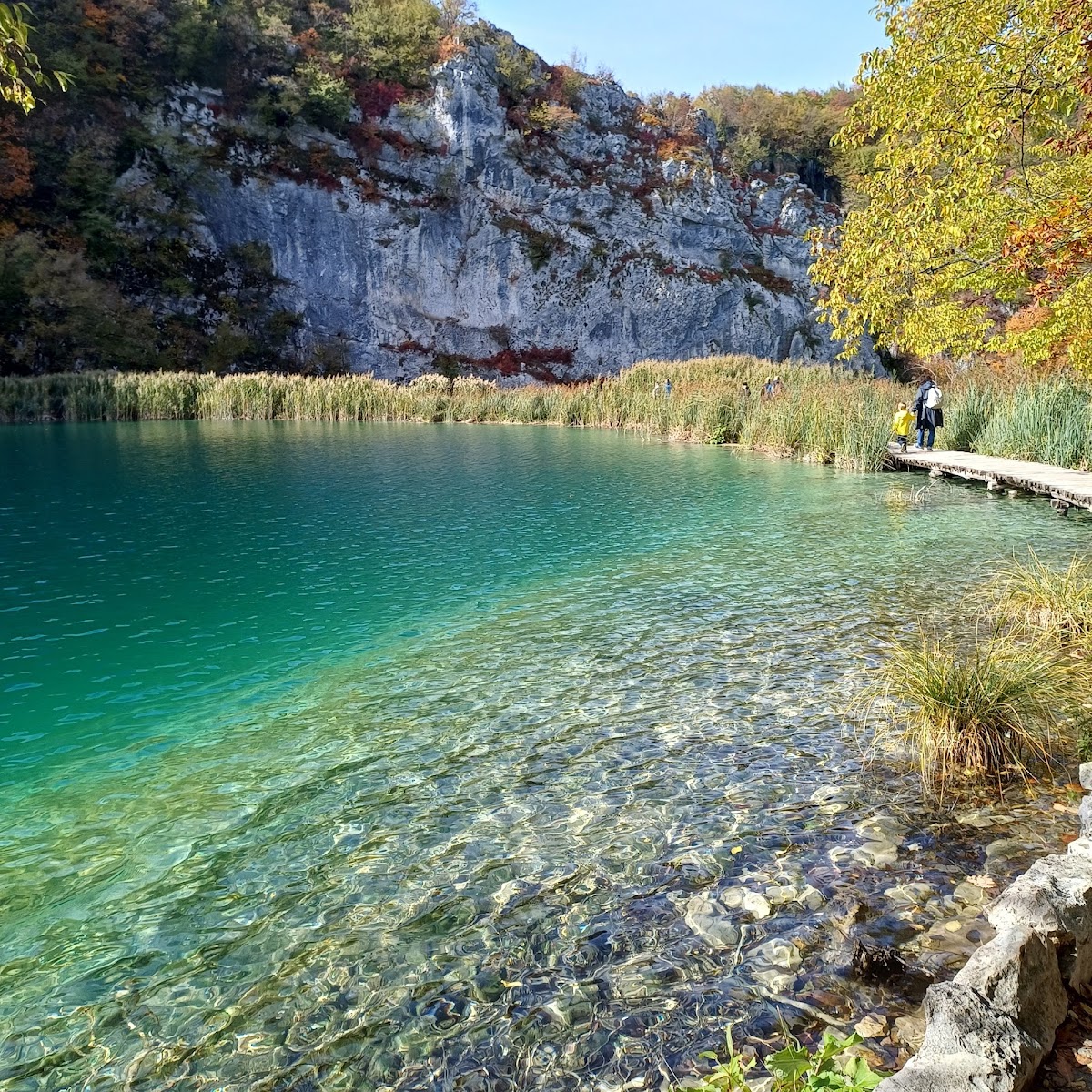
White balance: Start with daylight or cloudy white balance. The turquoise water color is a real phenomenon — don't push the white balance too warm or you'll neutralize the very thing that makes Plitvice photos special. A slightly cool white balance (around 5500–6000K) preserves the natural aqua tones while keeping foliage warm.
Color saturation: Increase vibrance (which protects already-saturated tones from clipping) rather than saturation. The greens and blues at Plitvice are naturally vivid — they need modest enhancement, not aggressive boosting. Use the HSL panel to fine-tune individual color channels: slightly boost the aqua/cyan luminance to make the water glow, and adjust orange/yellow saturation for autumn foliage.
Contrast and clarity: Add modest clarity (+10 to +20) to enhance texture in the travertine and moss. Use the tone curve to set a gentle S-curve for contrast. In long-exposure waterfall images, add localized clarity to the rocky surroundings while reducing clarity slightly on the water to enhance the silky effect.
Sharpening: Apply output sharpening appropriate to your final use — more for prints, less for screen display. Sharpen the rocks, boardwalk, and foliage aggressively; mask the sharpening to avoid adding noise to the smooth water areas.
HDR merge: When merging bracketed exposures, use Lightroom's Photo Merge > HDR for the most natural results. In Photoshop, luminosity masking gives you finer control over how you blend highlight and shadow detail. Avoid tone-mapping plugins that create the "grunge HDR" look — Plitvice's beauty is in its natural color and light, not artificial processing.
Frequently Asked Questions
Do I need a photography permit for Plitvice Lakes?
No — personal photography, including tripod and professional camera equipment, is permitted without any special authorization. Only commercial photography and filming require advance permits, submitted at least 20 days beforehand with fees starting at €130 for a full day.
Can I use a tripod on the boardwalks?
Yes, tripods are allowed. However, you must not block the path for other visitors. In practice, tripod use is only feasible during early morning, late afternoon, or in the off-season when the boardwalks are relatively empty. The wooden boardwalks also vibrate from foot traffic, which can blur long exposures.
Are drones allowed at Plitvice Lakes?
No. Drone use is strictly prohibited throughout the entire national park. Signs are posted at all entrances and throughout the park, and fines are enforced. There are no exceptions for personal or recreational use.
What's the single best month for photography?
October. The combination of autumn foliage, morning mist, lower crowds, warm golden light, and moderate water flow makes mid-October the peak season for landscape photography at Plitvice. May is the runner-up, offering peak waterfall flow and lush spring greenery.
What camera settings should I use for waterfalls?
Start with ISO 100, f/8–f/11, and a shutter speed of 0.5–2 seconds for the classic silky waterfall effect. Use a tripod and a polarizing filter. Add an ND filter if the ambient light is too bright to achieve these slow shutter speeds. Use your camera's timer or a remote release to avoid introducing camera shake.
How early should I arrive to avoid crowds?
Be at the entrance gate when it opens — 7:00 AM in summer, 8:00 AM in shoulder season. The first 90 minutes are your best window for crowd-free boardwalk photography. Tour buses typically arrive between 10:00 and 11:00 AM and depart by 4:00–5:00 PM, so late afternoon offers a second quiet window.
Can I enter the park before sunrise for photography?
Technically, the park opens at posted hours and you need a valid ticket. However, photographers report being able to remain in the park from before sunrise to after sunset without issue as long as they hold a valid ticket for that day. Check current opening hours at the official Plitvice Lakes website.
Which entrance is better for photography?
Entrance 1 provides immediate access to the Lower Lakes canyon, Veliki Slap, and Sastavci — the most dramatic and photogenic spots. Entrance 2 offers quicker access to the Upper Lakes and Kozjak. For a one-day photography trip, Entrance 1 is typically preferred. For a two-day trip, start at different entrances each day to cover both lake systems in morning light.
What should I wear for a photography day at Plitvice?
Sturdy hiking shoes with good grip — boardwalks can be slippery when wet. Dress in layers, as canyon temperatures are cooler than the surrounding area. Waterproof outer layer is essential year-round. In winter, bring warm gloves (consider photographer's gloves with fold-back fingertips), a warm hat, and hand warmers for your camera battery pocket.
Is one day enough for photography?
One day is enough to capture the highlights, but two days is strongly recommended for serious photography. One day forces you to choose between the Lower and Upper Lakes for morning light, and you'll miss the second golden-hour window at whichever section you don't prioritize. Two days lets you cover both lake systems in morning light, revisit spots with different weather conditions, and take a break during the crowded midday hours without missing anything.