Complete Plitvice Lakes Travel Guide: Everything You Need to Know (2026)
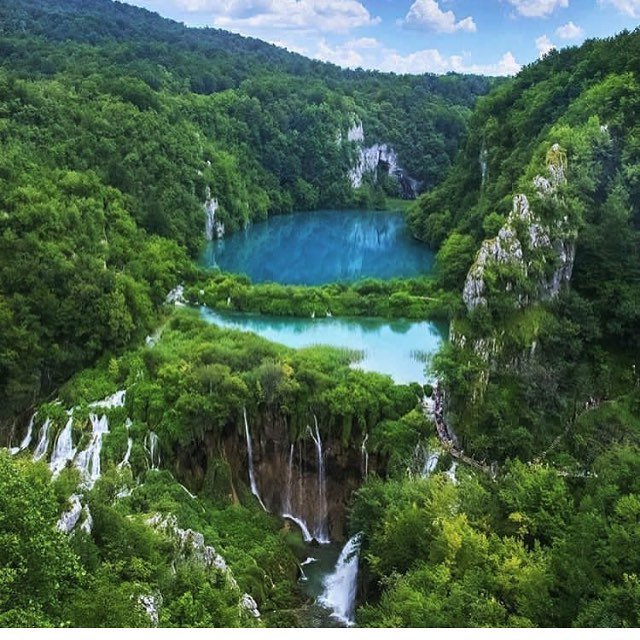
Plitvice Lakes National Park is Croatia's most visited natural attraction — and once you see it, you'll understand why. Sixteen terraced lakes cascade into each other through a network of over 90 waterfalls, all set within 296 square kilometers of ancient beech and fir forest. UNESCO recognized its extraordinary value back in 1979, making it one of the first natural World Heritage Sites on Earth, and nearly five decades later it continues to leave visitors speechless.
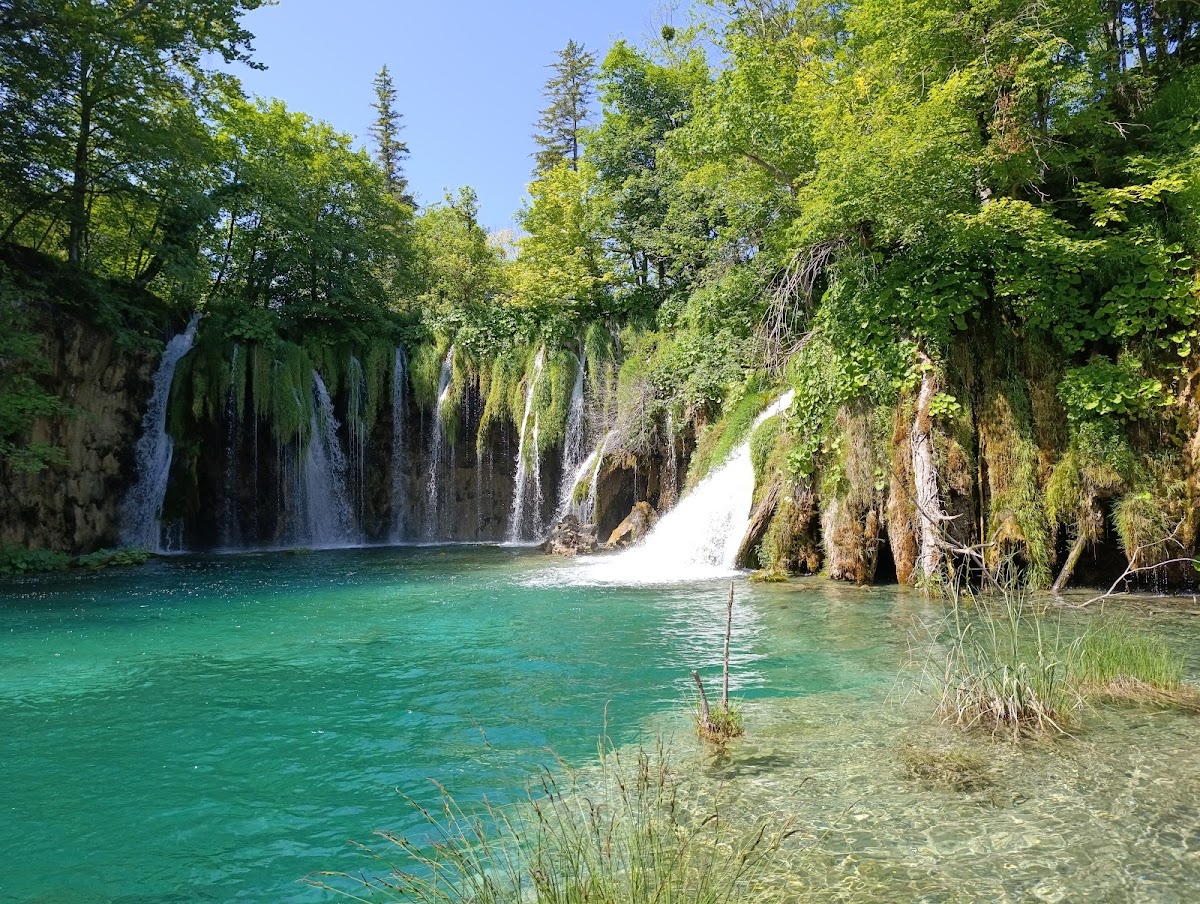
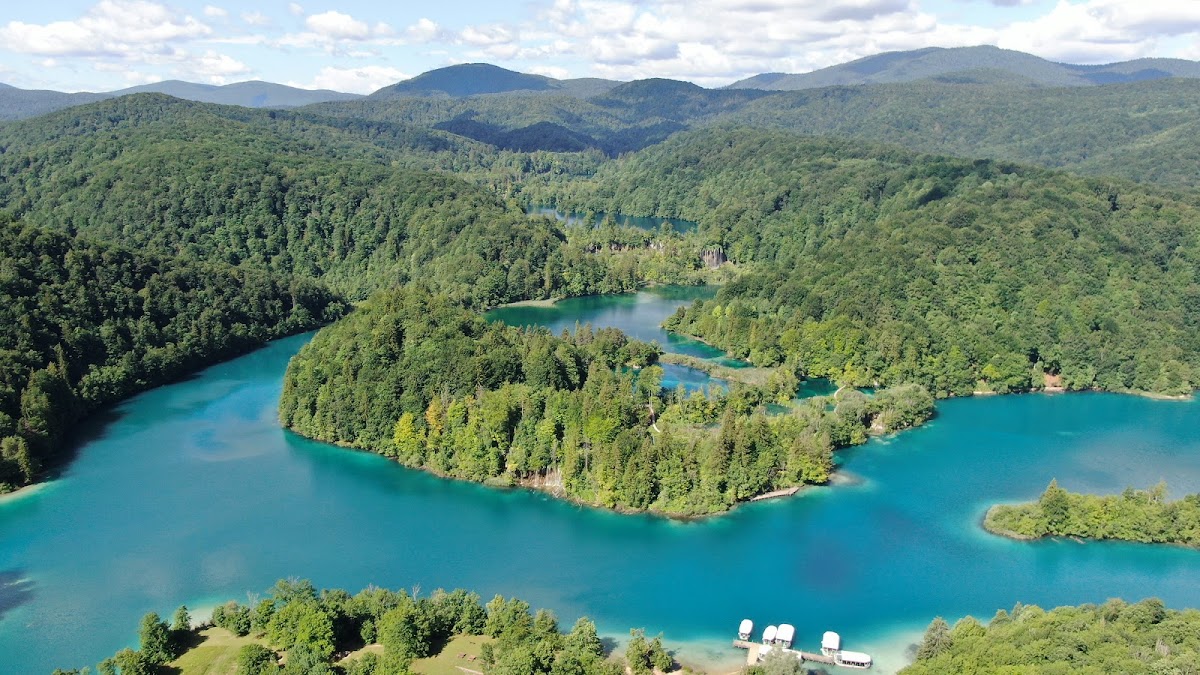
What makes Plitvice truly extraordinary isn't just the scale — it's the geology. The lakes sit on porous limestone and dolomite, and the travertine barriers that separate them are actually alive. Moss, algae, and bacteria deposit calcium carbonate year after year, slowly building the dams higher and reshaping the entire landscape. The lakes you see today are measurably different from the lakes visitors saw twenty years ago. The water's impossible turquoise and emerald coloring comes from dissolved minerals and the angle of sunlight hitting those calcium deposits — no filters needed.
The park receives approximately 1.5 million visitors annually, making planning essential. Show up unprepared on a July afternoon and you'll spend more time queuing than hiking. But visit with the right information — the right entrance, the right route, the right time of day — and you'll experience one of Europe's most remarkable natural landscapes in relative peace. That's what this guide is for. Everything you need to plan, book, and enjoy the perfect Plitvice Lakes visit, all in one place.
Planning Your Visit
Best Time to Visit
The park is open year-round, but your experience varies dramatically depending on the season. Each period offers distinct advantages, and the "best" time depends entirely on what you prioritize.

Spring (April–May) is widely considered the sweet spot. Snowmelt from the surrounding mountains pushes water flow to its highest levels, making the waterfalls absolutely thunderous. The lakes reach peak fullness, the forests are exploding with fresh green growth, and wildflowers carpet the meadows surrounding the park. Temperatures sit comfortably between 12°C and 22°C — ideal for hiking. Crowds are building but haven't reached peak levels, and ticket prices remain in the mid-range (€23.50 for adults). May is particularly rewarding: the waterfalls are at maximum power, the weather is warm enough for comfortable exploring, and the summer tour bus onslaught hasn't begun.
Summer (June–September) brings the highest temperatures (25°C–35°C), the longest daylight hours, and unfortunately the largest crowds. July and August are especially packed, with the park frequently reaching its daily visitor cap. Ticket prices hit their peak at €40 for adults. That said, if summer is your only option, you can still have a wonderful experience by arriving when gates open (7:00 AM in summer) and choosing longer routes that thin out the crowds. Water levels drop as summer progresses, reducing some waterfall spectacle, but the swimming-pool-blue color of the lakes intensifies.
Autumn (October–November) transforms the park into a photographer's paradise. The beech forests ignite in oranges, reds, and golds, reflected in the mirror-still lakes below. October offers mild temperatures (10°C–18°C), smaller crowds than summer, and lower ticket prices (€23.50 in October, €10 in November). Water levels are moderate, and the lower sun angle creates dramatic light through the canyons. November brings colder weather and occasional fog, which can make the park eerily beautiful.
Winter (December–March) is the quiet season. Visitor numbers drop to a fraction of summer levels, ticket prices fall to just €10, and on some days you might find entire sections of the park nearly empty. Snow and ice transform the waterfalls into frozen sculptures, and the surrounding forests look like something from a fairy tale. However, some boardwalk sections close due to ice, the panoramic train and electric boat may have reduced service, and shorter daylight hours limit your time. Temperatures range from -5°C to 5°C.
For our detailed month-by-month breakdown including photography conditions, specific weather data, and crowd predictions, see our Best Time to Visit Plitvice Lakes guide.
How Long to Stay
One day is sufficient to see the highlights. Most visitors spend 4–6 hours in the park, which is enough time to complete a medium-length route covering either the Lower or Upper Lakes plus a boat ride. If you arrive early (before 8:00 AM), you can comfortably do a comprehensive route like C or H, which covers both lake systems in 4–6 hours.
Two days is the ideal for anyone who wants to experience the park thoroughly without rushing. Day one, you can explore the Lower Lakes canyon and the waterfalls around Entrance 1 at a leisurely pace. Day two, tackle the Upper Lakes from Entrance 2, take the full electric boat ride across Lake Kozjak, and hike the forest trails that most one-day visitors skip. Two-day tickets offer significant savings compared to buying two single-day tickets, and they let you experience the park at different times of day — morning light in the Lower Canyon is completely different from afternoon light on the Upper Lakes.
Half a day is technically possible but not recommended unless you're extremely time-constrained. Route A or E takes 2–3 hours and gives you a taste of the park, but you'll miss the boat ride and one entire lake system.
What to Expect
Plitvice is not a theme park — it's a genuine wilderness experience with modern infrastructure. Expect wooden boardwalk paths (some narrow, some over water), gravel forest trails, steep staircases in places, and occasional uneven terrain. The paths are well-marked but not paved, and you'll be walking the entire time. There are no chairlifts, escalators, or shortcuts.
The park provides two forms of free transport included with your ticket: an electric boat that crosses Lake Kozjak (the largest lake, separating the Upper and Lower systems), and a panoramic train (actually an open-sided tram) that runs between various stops. Both are essential for the longer routes and are experiences in themselves.
Facilities include restaurants, cafés, and souvenir shops at both entrances and at a few points within the park. Toilets are available at the entrances and at the boat landing points. There is no Wi-Fi within the park trails (and honestly, you won't miss it).
Visitor Statistics & Facts
- Founded: 1949 (oldest national park in Southeast Europe)
- UNESCO World Heritage Site since: 1979
- Total area: 296.85 km² (73,350 acres)
- Number of lakes: 16 (12 Upper Lakes + 4 Lower Lakes)
- Number of waterfalls: 92+ (the count changes as travertine shifts)
- Highest waterfall: Veliki Slap at 78 meters (256 feet)
- Largest lake: Kozjak — 81.5 hectares, up to 46 meters deep
- Annual visitors: ~1.5 million
- Wildlife: Includes brown bears, wolves, lynx, wild boar, and 160+ bird species
- Elevation range: 367m to 1,280m above sea level
Getting There
Plitvice Lakes National Park sits in the mountainous Lika region of central Croatia, roughly equidistant from the major coastal and inland cities. It's not on a railway line, so your options are driving, bus, or organized tour.
From Zagreb (130 km — approximately 2 hours by car)
Zagreb is the most common starting point and the easiest connection. Take the A1 motorway south toward Split, then exit at Karlovac and follow the D1 national road through the Lika highlands to the park. The route is well-signposted. The final stretch on the D1 is a two-lane road winding through forests and small villages — scenic but not fast.
By bus: Flixbus and Croatia Bus operate multiple daily departures from Zagreb Bus Station (Autobusni kolodvor) to Plitvice. Journey time is 2–2.5 hours, and tickets cost approximately €12–€18 one way. Buses stop directly at both park entrances. This is the most popular public transport option.
Driving costs: A1 motorway toll from Zagreb to Karlovac exit is approximately €3.50. Parking at the park costs €10 per day for cars (Entrance 1 and Entrance 2 both have large parking lots). Fuel for the return trip runs about €20–€25 depending on your vehicle.
From Split (260 km — approximately 3–3.5 hours by car)
Take the A1 motorway north toward Zagreb, exit at Gornja Ploča, and follow the D1 to the park. Alternatively, take the scenic coastal road to Zadar and then cut inland — this takes longer (4+ hours) but is beautiful.
By bus: Several daily Flixbus and intercity connections run from Split to Plitvice. Journey time is 4–5 hours with possible stops. Tickets cost approximately €18–€25 one way. An early morning departure gets you to the park by late morning.
Organized tours: Many Split-based tour operators offer Plitvice day trips including transport, guide, and entrance ticket for €80–€120 per person. These are convenient but typically give you only 4–5 hours in the park, which is tight for anything beyond a short route.
From Zadar (130 km — approximately 1.5–2 hours by car)
Zadar is the closest major coastal city and an excellent base. Take the A1 motorway north briefly, then exit and follow the D1 inland to the park. The drive is straightforward and well-marked.
By bus: Regular Flixbus departures connect Zadar to Plitvice in approximately 2–2.5 hours. Tickets cost €10–€16 one way. This is one of the easiest bus connections to the park.
Organized tours: Day trips from Zadar run €60–€100 per person and typically include 5–6 hours of park time, which is more generous than tours from Split.
From Dubrovnik (450 km — approximately 4.5–5 hours by car)
Dubrovnik is the farthest major tourist city from Plitvice. The drive follows the stunning coastal road (E65/A1) north through the Neretva valley and then cuts inland. Note that you'll briefly pass through a small section of Bosnia and Herzegovina near Neum — have your passport ready.
By bus: Direct bus connections are limited. Most travelers take a bus from Dubrovnik to Split or Zagreb, then connect to Plitvice. Total journey time is 7–9 hours with transfers. Given the distance, an overnight stay en route (Split or Zadar) is strongly recommended.
Organized tours: Multi-day tours from Dubrovnik that include Plitvice are available, usually as part of a broader Croatia itinerary. Single-day trips from Dubrovnik to Plitvice are exhausting due to the distance and not recommended.
Practical Driving Tips
- GPS coordinates: Entrance 1: 44.9044°N, 15.6098°E | Entrance 2: 44.8804°N, 15.6161°E
- Parking: Both entrances have large lots. Entrance 2's lot is slightly larger. In peak summer, arrive before 9:00 AM or expect to circle. Overflow parking opens when main lots fill.
- Motorway tolls: Croatia uses a ticket-based toll system on the A1. Payment accepted in cash (kuna/euros) and credit cards. An ENC electronic tag speeds you through.
- Road conditions: The D1 national road is well-maintained but narrow in sections. Watch for slow-moving vehicles and the occasional wildlife crossing. Winter driving may require snow chains — check conditions before departing between November and March.
Entrance Tickets & Park Information
Ticket Prices (2026 Season)
Plitvice operates a seasonal pricing structure. Prices vary significantly throughout the year, making off-season visits dramatically more affordable.
One-Day Adult Tickets:
| Season | Period | Price |
|---|---|---|
| Low Season | January 1 – March 31, November 1 – December 31 | €10 |
| Mid Season | April 1 – May 31, October 1 – October 31 | €23.50 |
| High Season | June 1 – September 30 | €40 |
One-Day Reduced Tickets (Students, ages 7–17):
| Season | Period | Price |
|---|---|---|
| Low Season | January – March, November – December | €5 |
| Mid Season | April – May, October | €13 |
| High Season | June – September | €25 |
Two-Day Tickets (valid for consecutive days):
| Season | Adult | Reduced |
|---|---|---|
| Low Season | €16 | €8 |
| Mid Season | €35 | €20 |
| High Season | €55 | €33 |
Free admission: Children under 7 enter free. Persons with disabilities also receive free entry (with valid documentation).
What's included: Every ticket includes unlimited use of the electric boat across Lake Kozjak and the panoramic train — no extra charge. It also includes visitor insurance.
Buying Tickets
Buy online in advance. This is not optional advice during peak season — it's essential. The park enforces daily visitor caps, and summer days regularly sell out. Purchase tickets through the official website (np-plitvicka-jezera.hr) up to one day before your visit. You'll receive a QR code to show at the entrance on your phone or as a printout.
In the low and mid seasons, buying at the gate is usually fine, but online purchase still saves you time in the ticket queue.
Opening Hours
| Period | Opening | Last Entry | Closing |
|---|---|---|---|
| January – March | 8:00 AM | 1:00 PM | 4:00 PM |
| April – May | 7:00 AM | 4:00 PM | 7:00 PM |
| June – August | 7:00 AM | 5:00 PM | 8:00 PM |
| September – October | 7:00 AM | 4:00 PM | 7:00 PM |
| November – December | 8:00 AM | 1:00 PM | 4:00 PM |
Important: "Last entry" is the latest you can enter the park, not the closing time. Plan to arrive well before last entry to have enough time for your chosen route.
Two Entrance Points
The park has two main entrances, each providing access to different areas:
Entrance 1 (Ulaz 1) — Located at the northern end of the park, near the Lower Lakes. This is the most popular entrance and the starting point for routes A, B, and C. From here, you descend directly into the Lower Lakes canyon and reach Veliki Slap (the Great Waterfall) within 15 minutes of entering. Best for: First-time visitors, photographers wanting the iconic Lower Canyon shots, and those doing shorter visits.
Entrance 2 (Ulaz 2) — Located further south, near the Upper Lakes and Lake Kozjak. Starting point for routes E, F, and H. From here, you take a short walk to the panoramic train or descend toward the Upper Lakes. Best for: Visitors wanting to start with the quieter Upper Lakes, those staying at nearby hotels (Hotel Jezero is walking distance), and anyone doing Route H.
Entrance 3 (Auxiliary) — A smaller auxiliary entrance near the village of Plitvica Selo, primarily used by guests staying in nearby accommodation. It provides a shortcut to the Lower Lakes area without going through the main Entrance 1 facilities.
Park Facilities
Both main entrances have:
- Ticket offices and information centers
- Restaurants and cafés
- Souvenir shops
- Toilets (also available at boat landings within the park)
- Parking lots (€10/day for cars, €15/day for campers/buses)
- Luggage storage at the information centers
Within the park, you'll find small refreshment kiosks at key points (near the boat landings and at the St. 2 train stop) selling drinks, sandwiches, and snacks. Prices inside the park are higher than outside — bring your own water and snacks if you're budget-conscious.
Hiking Routes & Trails
Plitvice offers seven officially marked routes labeled A, B, C, E, F, H, and K. Each route is designed as a complete circuit, combining walking with electric boat rides and panoramic train transport. The letters aren't sequential difficulty ratings — they indicate starting points and coverage areas.
Routes Starting from Entrance 1
Route A — Lower Lakes Express
- Distance: 3.5 km
- Duration: 2–3 hours
- Difficulty: Easy
- Boat/Train: Neither
- What you see: Lower Lakes canyon, Veliki Slap (Great Waterfall), and the boardwalks through the narrowest part of the canyon
Route A is the shortest and simplest option. You walk from Entrance 1 down into the Lower Lakes canyon, follow the boardwalks past the cascading waterfalls, visit Veliki Slap (78m, the park's tallest waterfall), and loop back to Entrance 1 entirely on foot. No boat, no train.
Best for: Visitors with limited time (under 3 hours), those with mobility concerns who want to see the highlights, and families with very young children. While short, this route covers the most photographed section of the park — the Lower Canyon boardwalks are genuinely spectacular.
Limitation: You won't see the Upper Lakes or ride the electric boat, which means you're missing roughly half the park's highlights.
Route B — Lower Lakes with Boat Ride
- Distance: 4.0 km
- Duration: 3–4 hours
- Difficulty: Easy to moderate
- Boat/Train: Lake Kozjak boat (long crossing) + panoramic train
- What you see: Everything in Route A plus the electric boat ride across Lake Kozjak and a panoramic train ride back to Entrance 1
Route B extends Route A by continuing past the Lower Lakes canyon to the P3 boat landing, where you board the electric boat for the 30-minute crossing of Lake Kozjak (the park's largest lake, at 81.5 hectares). You disembark at the northern shore and take the panoramic train back to Entrance 1.
Best for: First-time visitors who want a well-rounded experience without committing to a full day. The boat ride across Kozjak is magical — the silence, the emerald water, the forested shores.
Route C — Both Lake Systems (Full Experience from Entrance 1)
- Distance: 8.0 km
- Duration: 4–6 hours
- Difficulty: Moderate
- Boat/Train: Two boat rides + panoramic train
- What you see: Lower Lakes canyon, Veliki Slap, Lake Kozjak boat crossing, Upper Lakes boardwalks, all major waterfalls
Route C is the most popular full-park route and the one we recommend for most visitors. From Entrance 1, you walk the Lower Canyon, take the long boat ride from P3 across Kozjak, then take a shorter boat ride from P1 to P2 to access the Upper Lakes. After walking the Upper Lakes boardwalks (where some of the park's most beautiful cascading waterfall sequences flow), you take the panoramic train back to Entrance 1.
Best for: Anyone with 4–6 hours who wants to see both lake systems. This is the "standard" Plitvice experience that most travel guides recommend, and for good reason — it covers all the highlights with a manageable amount of walking.
Routes Starting from Entrance 2
Route E — Upper Lakes Focus
- Distance: 4.3 km
- Duration: 2–3 hours
- Difficulty: Easy to moderate
- Boat/Train: Short boat ride + panoramic train
- What you see: Upper Lakes cascading waterfalls, forest boardwalks, boat ride on Lake Kozjak's southern end
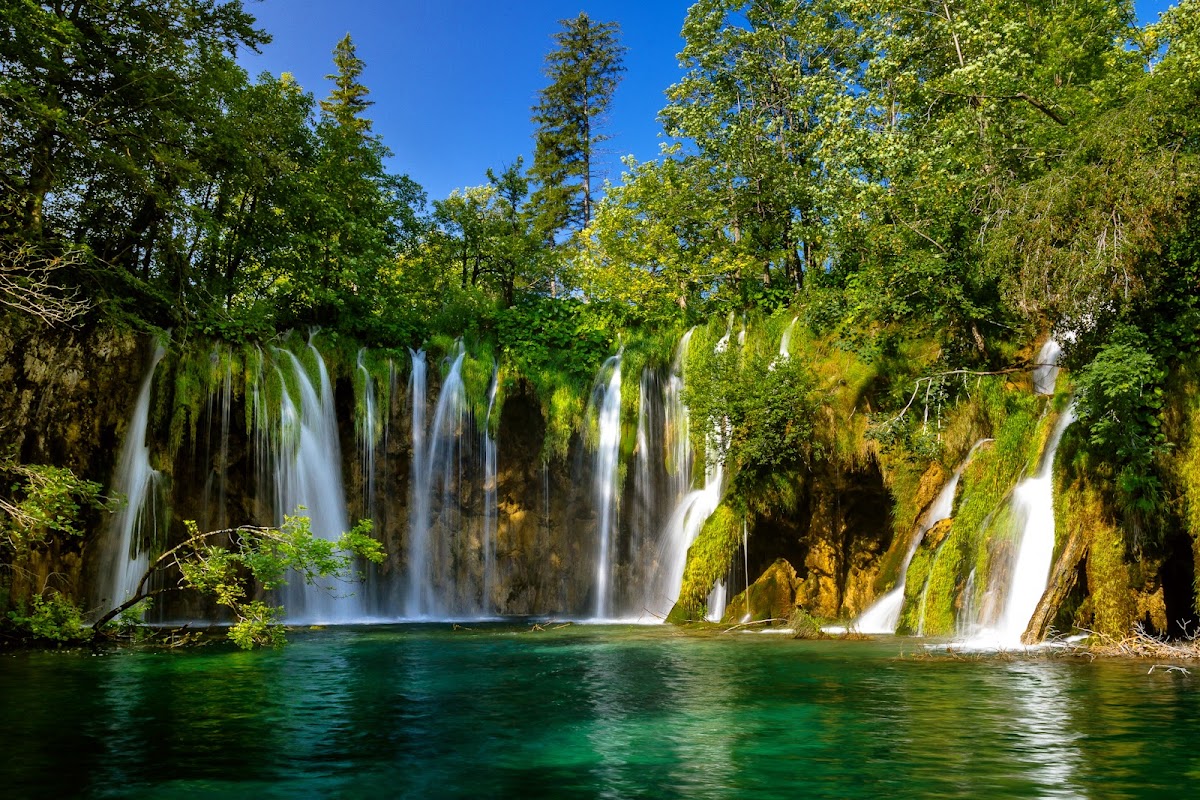
Route E is the Entrance 2 equivalent of Route A — a shorter circuit focusing on one lake system. From Entrance 2, you take a brief walk and a short boat ride from P1 to P2, then explore the Upper Lakes boardwalks. The Upper Lakes are characterized by wider, shallower lakes with multiple cascading waterfalls flowing over moss-covered travertine — a different visual experience from the dramatic canyon of the Lower Lakes.
Best for: Visitors staying near Entrance 2 (Hotel Jezero area) who want a shorter excursion, or as a complement to a Lower Lakes visit on a separate day.
Route F — Lower Lakes from Entrance 2
- Distance: 4.6 km
- Duration: 3–4 hours
- Difficulty: Easy to moderate
- Boat/Train: Lake Kozjak boat (long crossing) + panoramic train
- What you see: Lake Kozjak boat crossing, Lower Lakes canyon, Veliki Slap
Route F is designed for visitors starting at Entrance 2 who want to see the Lower Lakes. You walk to the P1 boat landing, take the long crossing of Lake Kozjak to P3, then explore the Lower Lakes canyon and Veliki Slap before the panoramic train returns you to Entrance 2.
Best for: Visitors staying near Entrance 2 who prioritize the iconic Lower Lakes canyon views.
Route H — Both Lake Systems (Full Experience from Entrance 2)
- Distance: 8.9 km
- Duration: 4–6 hours
- Difficulty: Moderate
- Boat/Train: Two boat rides + panoramic train
- What you see: Upper Lakes boardwalks, Lake Kozjak crossing, Lower Lakes canyon, Veliki Slap — everything, in reverse order compared to Route C
Route H is the Entrance 2 mirror of Route C. You start with the Upper Lakes, cross Kozjak by boat, explore the Lower Canyon, and return via panoramic train. The distance is slightly longer (8.9 km vs 8.0 km) due to the starting position.
Best for: Anyone who wants the full park experience but is based near Entrance 2. Functionally equivalent to Route C in terms of what you see — just in reverse order.
The Full-Day Challenge
Route K — Complete Park Circuit
- Distance: 18.3 km
- Duration: 6–8 hours
- Difficulty: Challenging
- Boat/Train: One short boat ride only
- What you see: Everything — both lake systems, forest trails, elevated viewpoints, and sections of the park that other routes skip entirely
Route K is the ultimate Plitvice experience. Starting from Entrance 1, this 18+ kilometer route takes you through the Lower Lakes, across Lake Kozjak (one short boat segment), through the Upper Lakes, and then along elevated forest trails that run above the lakes — trails that no other route uses. You'll pass through dense beech-fir forest, climb to panoramic viewpoints, and walk long stretches without seeing another visitor.
Best for: Fit hikers who want to see the park beyond the standard tourist routes. Route K is where Plitvice transforms from a popular tourist attraction into a genuine wilderness experience. The forest sections are beautiful, quiet, and provide a completely different perspective — you're looking down at the lakes from above rather than walking along their edges.
Important: Route K requires proper hiking shoes, sufficient water (at least 2 liters), snacks, and an early start. There are no facilities along the forest trail sections.
Route Comparison Table
| Route | Start | Distance | Time | Difficulty | Lower Lakes | Upper Lakes | Boat | Train |
|---|---|---|---|---|---|---|---|---|
| A | Ent. 1 | 3.5 km | 2–3 hrs | Easy | ✅ | ❌ | ❌ | ❌ |
| B | Ent. 1 | 4.0 km | 3–4 hrs | Easy–Mod | ✅ | ❌ | ✅ | ✅ |
| C | Ent. 1 | 8.0 km | 4–6 hrs | Moderate | ✅ | ✅ | ✅✅ | ✅ |
| E | Ent. 2 | 4.3 km | 2–3 hrs | Easy–Mod | ❌ | ✅ | ✅ | ✅ |
| F | Ent. 2 | 4.6 km | 3–4 hrs | Easy–Mod | ✅ | ❌ | ✅ | ✅ |
| H | Ent. 2 | 8.9 km | 4–6 hrs | Moderate | ✅ | ✅ | ✅✅ | ✅ |
| K | Ent. 1 | 18.3 km | 6–8 hrs | Challenging | ✅ | ✅ | ✅ | ❌ |
Which Route Should You Choose?
- Only have 2–3 hours? → Route A (Entrance 1) or Route E (Entrance 2)
- Have 3–4 hours? → Route B (Entrance 1) or Route F (Entrance 2)
- Have 4–6 hours and want the full experience? → Route C (Entrance 1) or Route H (Entrance 2)
- Fit hiker wanting the ultimate day? → Route K (Entrance 1, full day)
- Visiting for two days? → Route A or B on day 1, Route E on day 2 (or vice versa)
What to See & Do
Plitvice Lakes is much more than a walk along boardwalks. Here are the experiences that make this park truly special. For an in-depth breakdown, see our Top 10 Things to Do at Plitvice Lakes guide.
Must-See Waterfalls
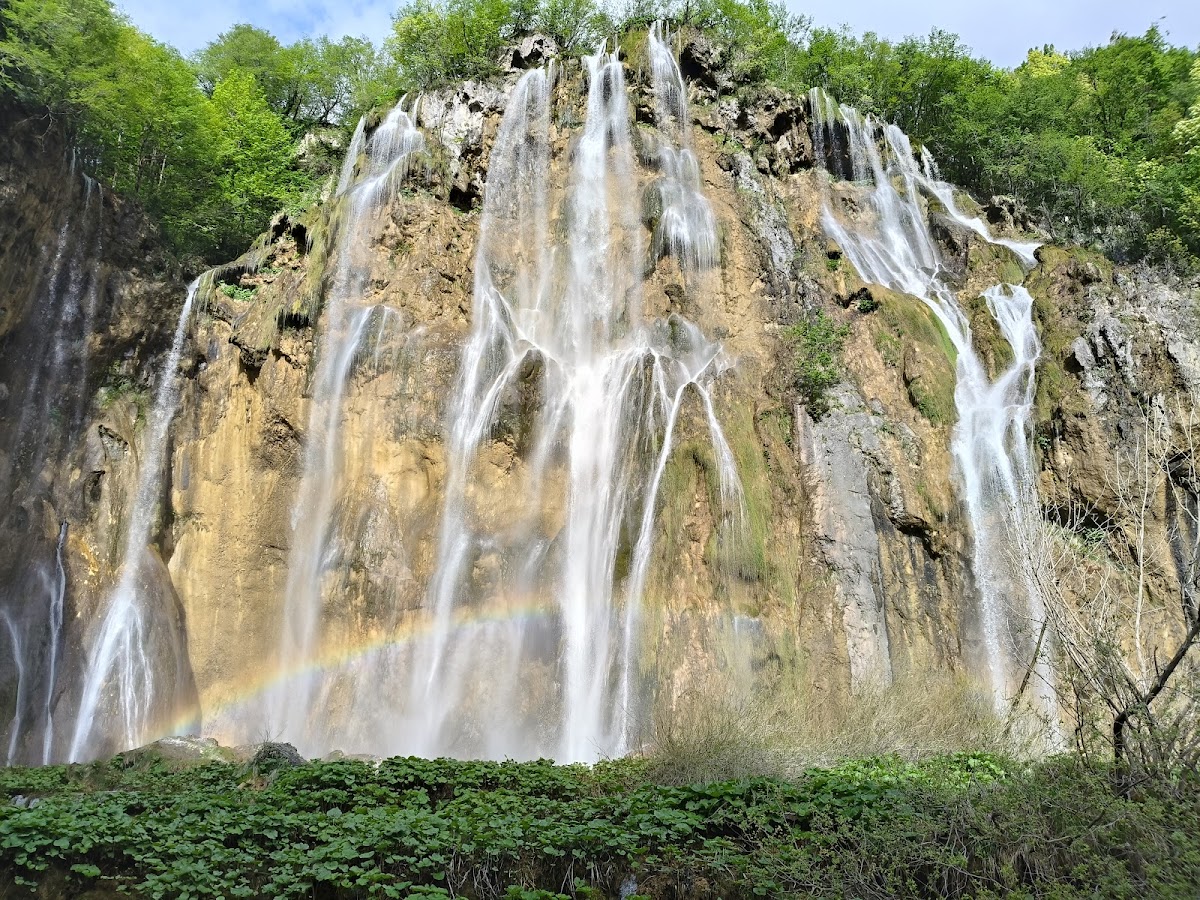
Veliki Slap (Great Waterfall) — At 78 meters, this is the tallest waterfall in Croatia and the undisputed star of the park. Located near Entrance 1, it plunges from a cliff face into a pool surrounded by mossy rocks. The viewing platform at its base lets you stand close enough to feel the spray. In spring, when snowmelt swells the flow, it's genuinely thunderous. In winter, it can freeze into a dramatic ice column.
Milanovački Slap — Often overlooked but arguably the most beautiful waterfall in the park. This wide, multi-tiered cascade flows over moss-covered travertine steps in the Lower Lakes area. The green moss against the turquoise water creates colors that look artificially enhanced but are completely natural.
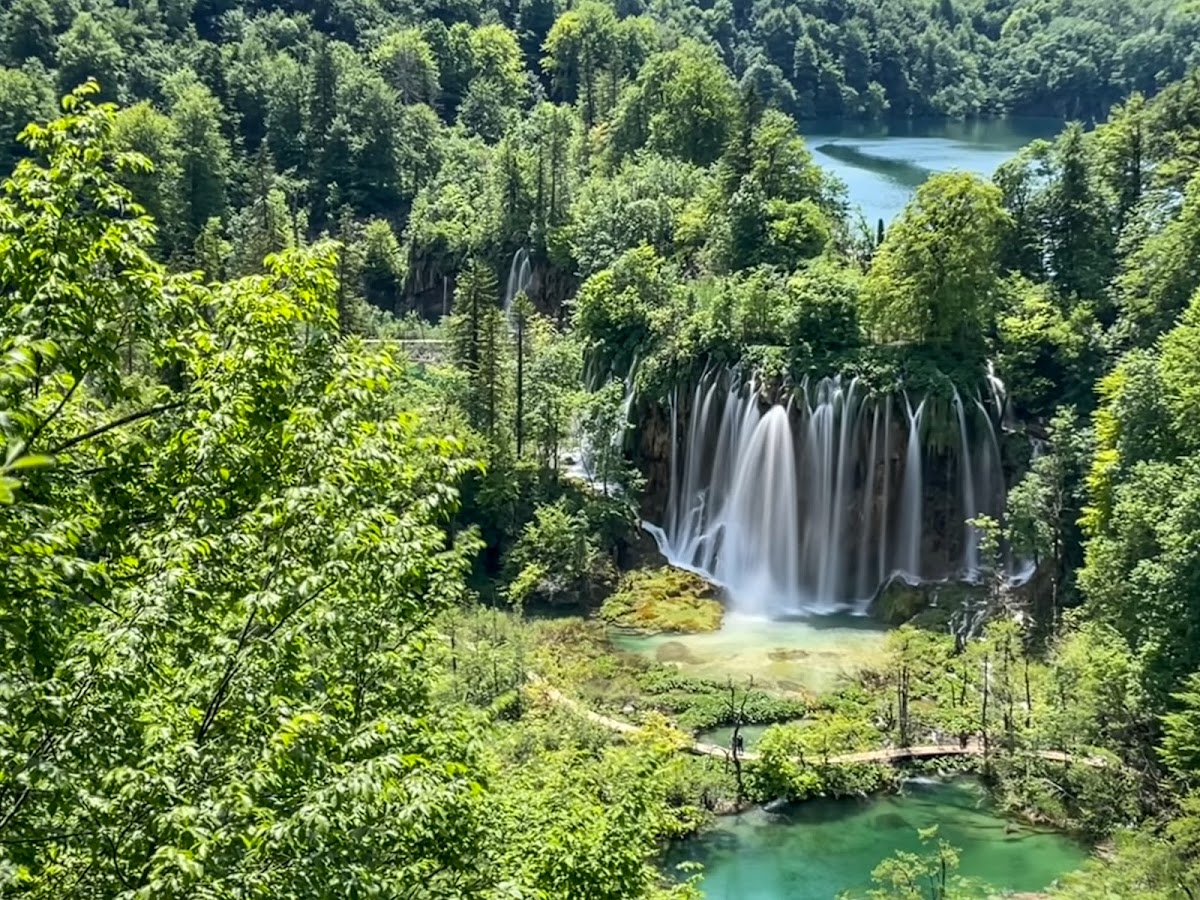
Galovački Buk — The largest waterfall on the Upper Lakes, this wide cascade drops 25 meters in a series of steps. It's best viewed from the boardwalk that passes directly alongside it — you can feel the mist on your face.
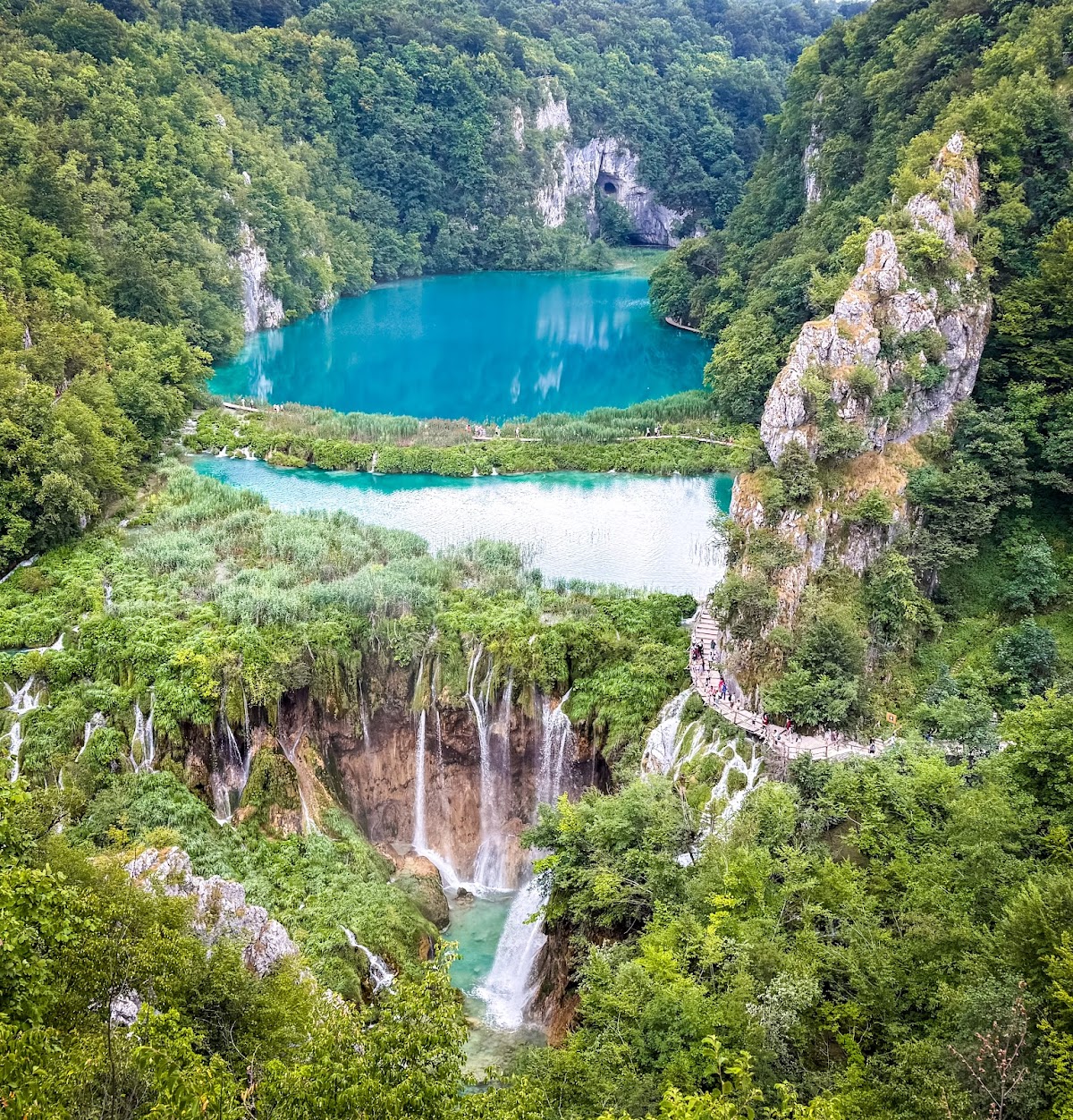
Sastavci — The point where the Lower Lakes' streams converge before dropping into the Korana River gorge. This viewpoint, accessible from the trail near Entrance 1, gives you a panoramic view of multiple waterfalls flowing simultaneously into a single canyon. It's the most-photographed spot in the entire park.
Electric Boat Ride Across Lake Kozjak
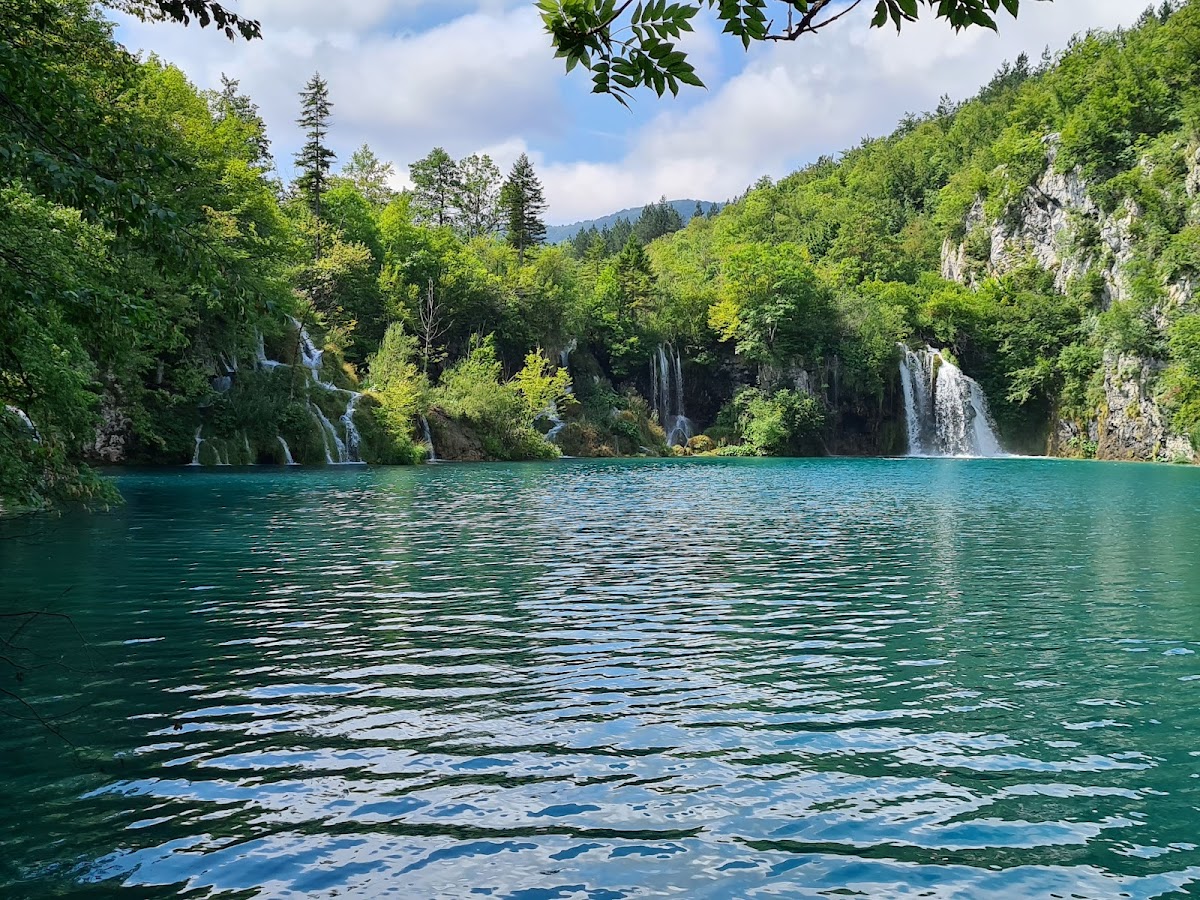
The electric boat crossing of Lake Kozjak is included in your entrance ticket and is one of the most serene experiences in the park. The boats are completely silent (electric-powered to protect the lake's ecosystem), and the 20–30 minute crossing gives you a chance to sit, rest your legs, and absorb the scenery. The lake is up to 46 meters deep with visibility extending several meters down — you can see fish, submerged logs, and the lake's turquoise floor from the boat. The boats run continuously throughout operating hours, with departures every 15–30 minutes depending on demand.
Panoramic Train Ride
The open-sided "panoramic train" (actually a road-train with several carriages) connects key stops within the park. It runs primarily between the Entrance 2 area and the Upper Lakes boat landing. The ride takes about 15 minutes and passes through dense forest, offering occasional glimpses of the lakes below. It's functional transport that also happens to be genuinely pleasant.
Photography Hotspots
Plitvice is one of the most photogenic places in Europe, but some spots stand out:
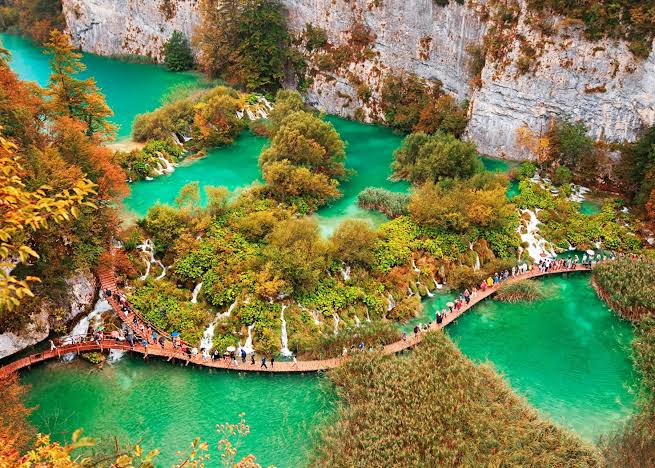
Lower Canyon boardwalks — The classic shot: turquoise water, wooden boardwalk, waterfalls cascading from canyon walls. Best in early morning when the canyon catches the first light and crowds haven't arrived.
Veliki Slap viewpoint — The tallest waterfall is best photographed from the lower viewing platform. Include people on the nearby bridge for scale.
Sastavci panorama — Multiple waterfalls converging into the Korana gorge. Best with a wide-angle lens in late afternoon light.
Upper Lakes cascades — The gentle, wide cascades over green moss look surreal in any light. Use a slow shutter speed (ND filter recommended) to blur the water into silk.
Lake Kozjak reflections — On calm mornings, the lake surface becomes a perfect mirror. The boat landing area at P1 is a reliable spot for reflection shots.
Elevated viewpoints on Route K — The forest trail sections of Route K offer the only aerial perspectives of the lakes. Bring a telephoto lens.
Photography tips: Overcast days actually produce better colors than bright sunshine, as harsh sun creates strong contrasts in the canyon. A polarizing filter cuts surface glare and intensifies the turquoise water colors. Early morning (first hour after opening) and late afternoon offer the best light and fewest people in your shots.
Beyond the Lakes
Wildlife spotting: The park is home to brown bears, wolves, European lynx, wild cats, wild boar, otters, and over 160 bird species including eagles, owls, and woodpeckers. You're unlikely to see large predators on the main routes, but wild boar sightings near the forest trails are not uncommon, and birding is excellent year-round.
Winter ice formations: Between December and February, many waterfalls partially or fully freeze, creating ice sculptures that transform the park into a winter wonderland. The frozen cascades are particularly dramatic around the Lower Lakes canyon.
Kayaking on the Korana River: Just outside the park boundary, near the village of Korana, several outfitters offer kayaking trips on the crystal-clear Korana River. This is the same water that flows out of the lakes — same stunning turquoise color, but with far fewer tourists. Half-day trips cost approximately €40–€60.
Where to Stay
Choosing where to stay near Plitvice Lakes comes down to one key decision: convenience versus value. Staying inside or adjacent to the park puts you at the gates first thing in the morning (a huge advantage), while staying in nearby towns saves money and offers more dining options.
Inside the Park
Three hotels sit within the national park boundary, all operated by the park authority and located near Entrance 2:
Hotel Jezero — The most popular option. Modern, well-maintained, with two restaurants, a wellness center, and rooms overlooking the forest. Walking distance to Entrance 2 and Lake Kozjak. Doubles from €120–€200/night in high season. Hotel guests receive extended park tickets, letting you enter before regular opening and stay later.
Hotel Plitvice — Classic mid-range option set in the forest near Entrance 2. Comfortable rooms, less polished than Jezero but with genuine character. Doubles from €90–€160/night.
Hotel Bellevue — The most basic of the three park hotels. Clean, functional, budget-friendly. Doubles from €70–€130/night.
Advantage of staying in-park: Walk to the entrance in minutes, beat the crowds, and enjoy the park in the golden hours of early morning and late afternoon when day-trippers have left.
Nearby Villages
The surrounding villages offer guesthouses, apartments, and small pensions at lower prices:
Rastovača — Closest village to Entrance 1, literally steps from the gate. Guesthouses here are convenient and affordable (€40–€80/night for doubles). Walk to the park in 5 minutes.
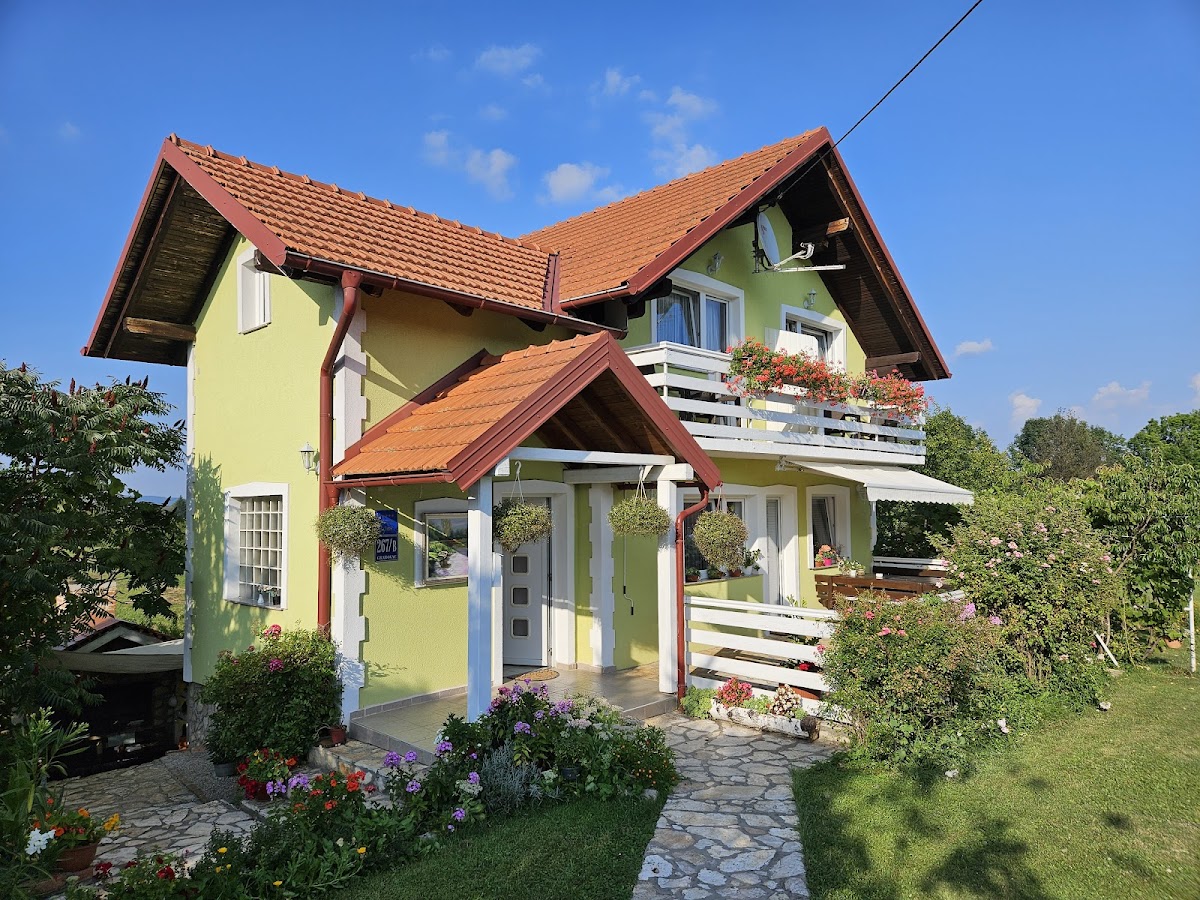
Plitvica Selo — Adjacent to auxiliary Entrance 3 and close to Entrance 1. Several well-reviewed family-run pensions, including Pansion Breza (less than a 15-minute walk from Entrance 3, with free parking and an on-site restaurant serving hearty breakfasts).
Mukinje — Small village near Entrance 2. Quiet, residential, with a handful of private rooms and apartments. Good option if you want peace and proximity to Entrance 2.
Rakovica — A small town about 12 km from the park. More accommodation options, a few restaurants, and access to nearby attractions like Barać Caves. Slightly less convenient but more affordable and less "tourist-oriented."
Selište Drežničko — About 15 km from the park, near the town of Slunj. Budget-friendly with a more authentic local feel.
Booking Tips
- Book early for summer. In-park hotels sell out months in advance for July and August.
- Apartments and pensions in the surrounding villages offer the best value — often €40–€60/night for a clean double room with breakfast.
- Consider Slunj (30 minutes north) if Plitvice-area accommodation is booked. It's home to the beautiful village of Rastoke and has good budget options.
Where to Eat
The Lika region surrounding Plitvice Lakes has a distinctive cuisine shaped by its mountainous geography and pastoral traditions. This isn't Mediterranean Croatia — it's hearty, meat-focused, and deeply satisfying after a day of hiking.
Inside and Near the Park
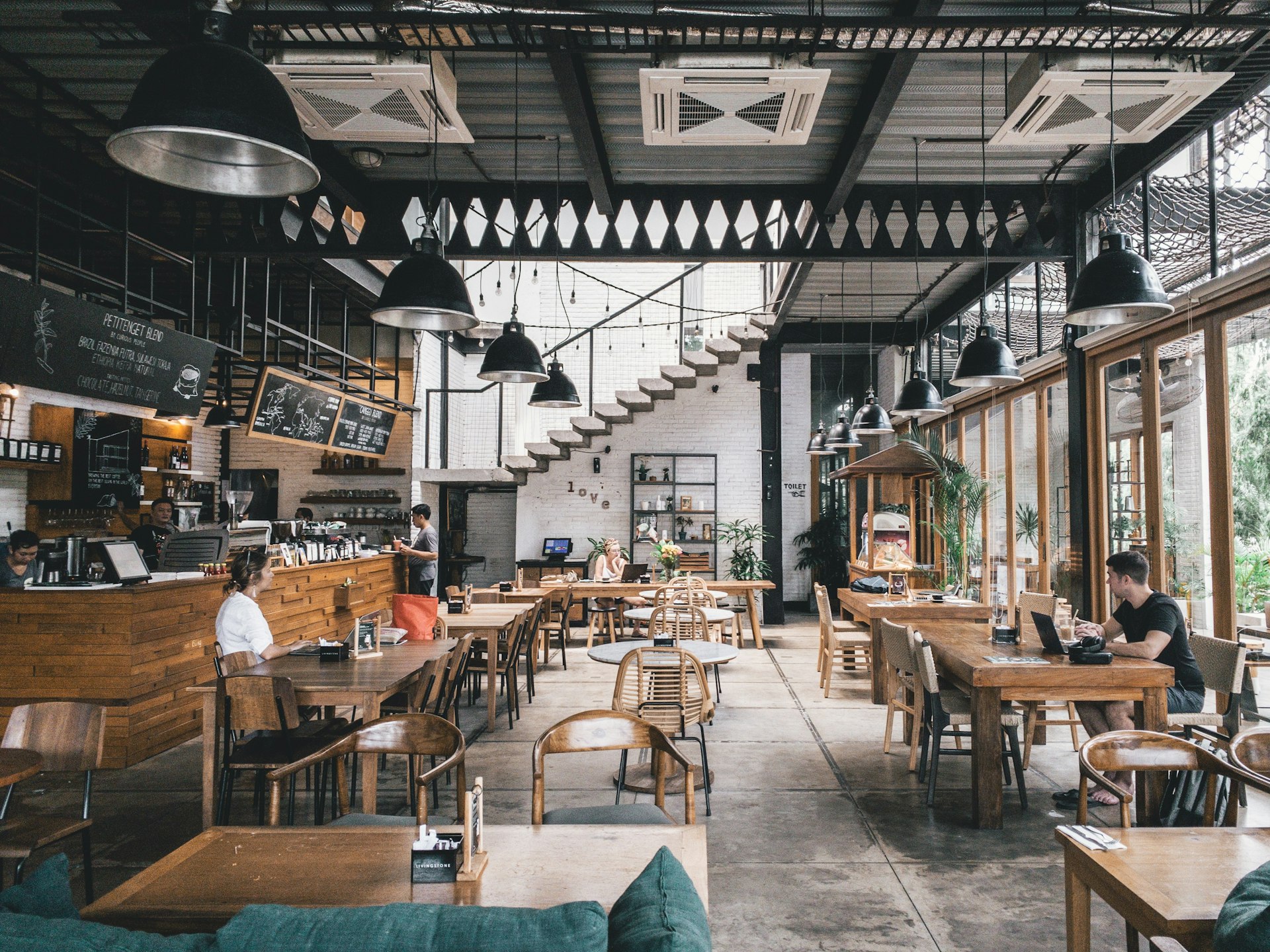
Lička Kuća (Entrance 1) — The iconic park restaurant, built in 1972 and designed as a traditional Lika house. It has operated as both a restaurant and informal ethno-museum for over 50 years, and its ambiance is as much a draw as the food. Exposed stone walls, wooden beams, traditional textiles — the setting is genuinely atmospheric. The menu focuses on Lika specialties: lamb under the peka (bell), grilled trout, bean stew (grah), and homemade sausages. Main dishes €12–€25. Reservations recommended in summer.
Restaurant Poljana (Entrance 2) — Larger and more modern than Lička Kuća, situated at the Entrance 2 complex. Offers a mix of Croatian and international dishes. It's convenient if you're finishing a route at Entrance 2 and need a sit-down meal. Main dishes €10–€20.
Park kiosks — Small refreshment stands inside the park sell sandwiches, grilled sausages, drinks, and ice cream. Prices are marked up (expect €4–€6 for a sandwich, €2–€3 for a drink), but they're convenient when you need a quick energy boost mid-hike.
Outside the Park
Plitvice Holiday Resort Restaurant — Located minutes from the park, this restaurant highlights Lika cuisine with a slightly more refined approach. Signature dishes include homemade porcini mushroom soup, wild game goulash, and bear goulash (yes, bear — it's a local tradition). Ingredients are locally sourced and seasonal. Main dishes €12–€22.
Restaurants in Rakovica and Selište — Several family-run restaurants in the nearby towns serve traditional Lika food at lower prices than the park restaurants. Look for menus featuring janjetina ispod peke (lamb under the bell), lički lonac (Lika pot — lamb slow-cooked with vegetables), strukli (baked cheese strudel), and locally caught trout.
Traditional Lika Cuisine to Try
- Janjetina ispod peke — Lamb slow-roasted under a cast-iron bell covered in hot embers. The signature dish of inland Croatia.
- Lički lonac — A one-pot stew of lamb, cabbage, potatoes, and root vegetables, slow-simmered for hours.
- Grah — A thick, rich bean stew, often served with sausages. The quintessential mountain comfort food.
- Škripavac cheese — A fresh, tangy cow's cheese unique to Lika that literally squeaks when you bite it (škripavac means "squeaky"). Sold at stalls near the park entrances.
- Trout — Freshwater trout from the Gacka River, served grilled or pan-fried. Simple and excellent.
- Cherry strudel — Home-baked cherry strudel sold at roadside stalls and pensions. A perfect post-hike treat.
Budget Tips
- Pack a picnic. Buy supplies at a grocery store in Zagreb, Zadar, or a nearby town before arriving. Bread, cheese, cured meats, and fruit make for an excellent trailside lunch at zero markup.
- Eat breakfast at your pension. Most guesthouses include a generous breakfast in the room rate.
- Roadside stalls near the entrances sell local cheese, strudel, and honey at very reasonable prices — much cheaper than the park restaurants.
Practical Tips
What to Bring
- Comfortable walking shoes with good grip. Boardwalks get wet and slippery, and forest trails on longer routes can be muddy. Trail shoes or hiking boots are ideal. Avoid flip-flops, sandals, or smooth-soled shoes.
- Water. Bring at least 1.5 liters per person (2+ liters for Route K). Refill options within the park are limited.
- Rain jacket or poncho. Weather in the Lika mountains changes quickly. Even on sunny days, a brief shower isn't unusual. The canyon sections amplify waterfall spray, and you will get misted.
- Sun protection. Sunscreen, hat, and sunglasses — especially on the exposed Upper Lakes boardwalks and during the boat ride.
- Snacks. Energy bars, fruit, nuts — anything to keep you going without relying on overpriced park kiosks.
- Camera with extra batteries. You will take more photos than you expect. Cold weather drains batteries fast.
- Small backpack. Keep your hands free for railings and uneven terrain.
- Layers. Even in summer, the canyon and forest areas are cooler than the surrounding areas. In spring and autumn, temperatures can shift significantly throughout the day.
Weather Considerations
Plitvice sits at 400–600 meters elevation in a continental climate zone, meaning it experiences greater temperature extremes than the Croatian coast. Summer highs reach 30°C+ but canyon shade keeps trails comfortable. Winter lows drop to -10°C or below, with snow common from December through February. Spring is the wettest season (great for waterfalls, less great for staying dry). Autumn is the driest, with crisp, clear days ideal for hiking.
Always check the weather forecast for Plitvička Jezera (not coastal cities) before your visit. Mountain weather can differ dramatically from what you see in Zagreb or Split.
Beating the Crowds
Plitvice receives over 1.5 million visitors annually, with the vast majority concentrated between June and September. Here's how to avoid the worst of it:
Arrive at opening time. The park opens at 7:00 AM in summer. The first 60–90 minutes before tour buses arrive are magical — you may have entire boardwalk sections to yourself.
Visit on weekdays. Saturdays and Sundays are significantly busier than weekdays, even in shoulder season.
Start from Entrance 2. Most tour groups begin at Entrance 1 (the Lower Lakes). Starting from Entrance 2 puts you on the Upper Lakes while the crowds are elsewhere.
Walk in the "wrong" direction. If you enter at Entrance 1, consider walking away from the Lower Canyon initially and saving it for later when the first-wave crowds have moved on.
Choose Route K. The forest trail sections of Route K see a fraction of the traffic on standard routes. Once you leave the main boardwalks, crowd density drops dramatically.
Visit in shoulder season. May, late September, and October offer the best balance of weather, water levels, and manageable visitor numbers.
Afternoon entry. In summer, the park is open until 8:00 PM. Entering after 3:00 PM means fewer visitors and beautiful late-afternoon light.
Accessibility
Plitvice Lakes is not fully accessible for wheelchair users or visitors with significant mobility limitations. The boardwalks are narrow (some are just 1.5 meters wide), have steps at various points, and are not wheelchair-accessible for the most part.
However, there are options:
- Viewpoints near Entrance 1 provide wheelchair-accessible views of the Lower Lakes and Veliki Slap. You can see the Great Waterfall within a short, relatively flat walk from Entrance 1.
- The panoramic train is accessible and can transport visitors between stops on relatively flat paths.
- The electric boat is technically accessible with assistance, though boarding can be challenging.
For visitors with limited mobility who can walk but not for long distances, Routes A (3.5 km) and E (4.3 km) are the shortest options. The Lower Canyon boardwalk from Entrance 1 — while it has some steps — offers the most spectacular scenery per distance walked.
Park Rules
- No swimming. Swimming is strictly forbidden in all lakes, rivers, and waterfalls — this protects the fragile travertine ecosystem.
- Stay on marked paths. The boardwalks and trails exist for your safety and to protect the environment. Stepping off the path damages the travertine and vegetation.
- No drones. Drone flying is prohibited throughout the national park.
- No camping. Camping within the park is not permitted.
- Dogs are allowed but must be kept on a leash at all times. Dogs may not swim in the water.
- No feeding wildlife. Particularly applicable to the fish in the lakes, which are easily visible and tempting to feed.
- No littering. Pack out everything you pack in. The park's pristine appearance is maintained by strict enforcement.
Nearby Attractions
If you're spending more than one day in the Plitvice area, several excellent attractions are within easy reach.
Rastoke — The Village of Waterfalls
Located 30 km north of Plitvice near the town of Slunj, Rastoke is a tiny village built at the confluence of the Slunjčica and Korana rivers, where dozens of small waterfalls flow directly through and underneath the traditional wooden houses. It's been called "the small Plitvice" — a working village where historic watermills still sit above cascading water. Wander the pathways, visit the Stari Mlin (Old Mill), and enjoy the photogenic scenes of water flowing beneath centuries-old buildings. Some outfitters here offer kayaking and rafting on the Korana River. Allow 1–2 hours for a visit. Admission is approximately €5 to access the waterfall walkways.
Barać Caves
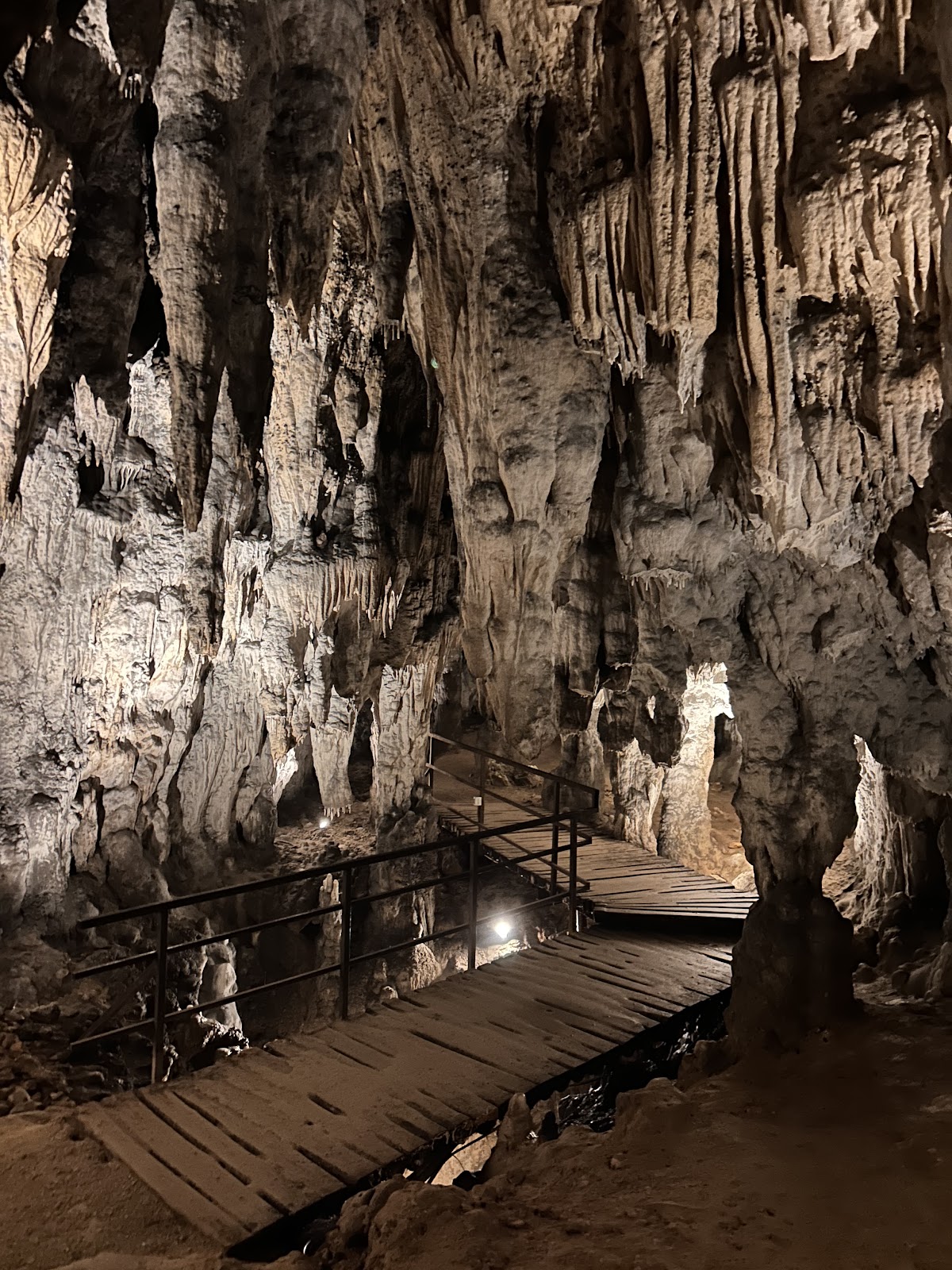
About 12 km from the park (near Rakovica), the Barać Caves are a network of underground chambers filled with spectacular stalactite and stalagmite formations. Guided tours take approximately 60 minutes, walking along illuminated paths through chambers that formed over thousands of years. The caves maintain a constant temperature of about 10°C year-round — bring a jacket. Admission is approximately €8 for adults. An excellent complement to the outdoor experience at Plitvice.
Korana River Canyon
The crystal-clear Korana River flows out of Plitvice Lakes and carves a beautiful canyon south of the park. Several outfitters offer kayaking, canoeing, and rafting excursions through the canyon, which features the same turquoise water as the lakes but without the crowds or restrictions. Half-day kayaking trips run approximately €40–€60 per person.
Nikola Tesla Memorial Centre
Located in Smiljan, approximately 60 km southwest of Plitvice, this museum and memorial center is dedicated to the legendary inventor who was born in this small village. The center includes exhibits on Tesla's life, inventions, and legacy, along with the reconstructed house where he was born. A worthwhile detour for science and history enthusiasts. Open year-round; admission approximately €5.
Karlovac
The "city of four rivers" sits about 70 km north of Plitvice on the route to/from Zagreb. Its unusual star-shaped Renaissance fortress (visible from aerial views) and riverside promenade make it worth a short stop. Karlovac is also a good base for budget accommodation if Plitvice-area options are booked.
Frequently Asked Questions
Can you swim in Plitvice Lakes?
No. Swimming is strictly prohibited in all lakes, rivers, and waterfalls within the national park. This rule protects the fragile travertine formations — the living deposits of calcium carbonate that create the lake barriers. The travertine is built by moss, algae, and bacteria in a slow geological process, and human contact with the water (sunscreen, oils, physical disturbance) can damage or halt this process. The rule is enforced with fines.
How much does it cost to enter Plitvice Lakes?
Entrance fees vary by season. Adult one-day tickets range from €10 (January–March, November–December) to €23.50 (April–May, October) to €40 (June–September). Children under 7 enter free. Two-day tickets offer savings: €16–€55 for adults depending on season. All tickets include the electric boat and panoramic train rides.
How long do you need at Plitvice Lakes?
Most visitors spend 4–6 hours in the park, which is enough for a medium route (B, C, F, or H) covering one or both lake systems plus boat and train rides. If you want a relaxed, thorough experience, plan for a full day (6–8 hours) or ideally two days. The shortest meaningful visit takes about 2–3 hours on Route A or E.
Is Plitvice Lakes worth visiting?
Absolutely. It's consistently rated as one of Europe's most beautiful natural sites and one of Croatia's top attractions. The combination of 16 interconnected turquoise lakes, 90+ waterfalls, and ancient forest is unlike anything else on the continent. Even in peak season with crowds, the scenery is breathtaking. Off-season visits (spring or autumn) are particularly magical.
Should I start at Entrance 1 or Entrance 2?
Entrance 1 puts you directly at the Lower Lakes canyon — the most dramatic and iconic scenery. Most first-time visitors and tour groups start here. Entrance 2 gives you access to the Upper Lakes and is generally less crowded in the morning. If you're doing a short visit, choose based on which lake system interests you more. For a full-day route (C or H), the experience is comparable from either entrance.
Can I bring my dog to Plitvice Lakes?
Yes. Dogs are permitted in the national park but must be kept on a leash at all times. Dogs are not allowed to swim in the water. The boardwalks can be narrow, so be mindful of other visitors. Water bowls and hydration for your dog are your responsibility.
Is Plitvice Lakes accessible for wheelchair users?
The park has limited wheelchair accessibility. Most boardwalks are narrow and include steps, making full routes impractical for wheelchair users. However, viewing areas near Entrance 1 provide wheelchair-accessible views of the Lower Lakes and Veliki Slap. The panoramic train is accessible, and the electric boat can be boarded with assistance. For visitors with limited mobility, the first section of the trail from Entrance 1 offers spectacular views with minimal distance.
Do I need to book tickets in advance?
In summer (June–September), yes — absolutely. The park enforces daily visitor caps, and peak-season days regularly sell out. Purchase tickets through the official website up to one day in advance. In the low and mid seasons (October–May), you can usually buy tickets at the gate, but online purchase saves queue time.
What is the best time of year to visit Plitvice Lakes?
May and September offer the best overall balance: pleasant weather, strong waterfall flow, manageable crowds, and mid-range ticket prices. Spring (April–May) has the most powerful waterfalls due to snowmelt. Summer (June–August) has the longest hours but heaviest crowds. Autumn (October) is spectacular for fall foliage. Winter (December–February) offers frozen waterfalls and near-solitude. For a detailed breakdown, see our Best Time to Visit Plitvice Lakes guide.
What should I wear to Plitvice Lakes?
Comfortable walking shoes with non-slip soles are essential — boardwalks get wet from waterfall spray and rain. Dress in layers, as temperatures in the forested canyon can be cooler than the surrounding area. Bring a rain jacket even on sunny days. In winter, insulated boots and warm layers are necessary. Avoid sandals, high heels, or any footwear without grip.
Are there restaurants inside the park?
Yes. The park has two main restaurants (Lička Kuća near Entrance 1 and Restaurant Poljana near Entrance 2) plus several kiosks selling sandwiches, drinks, and snacks at key points within the park. Prices inside the park are higher than outside, so bringing your own water and snacks is recommended for budget-conscious visitors.
How crowded does Plitvice Lakes get?
Very crowded in peak summer. The park receives over 1.5 million visitors annually, with July and August being the busiest months. The daily visitor cap means entry is not unlimited — popular summer days sell out. To minimize crowd impact: arrive at opening (7:00 AM in summer), visit on weekdays, start from Entrance 2, and choose longer routes that thin the crowds. The Lower Lakes canyon boardwalk is the most congested section.
Can I fly a drone at Plitvice Lakes?
No. Drone flying is prohibited throughout the national park. This rule is strictly enforced. There are no special permits available for recreational drone operators.
Is one day enough for Plitvice Lakes?
One day is sufficient to see the major highlights if you plan efficiently. Choose Route C (from Entrance 1) or Route H (from Entrance 2) to see both lake systems in 4–6 hours. Arrive at opening for the best experience. However, two days allows for a much more relaxed visit — explore one lake system per day, return to favorite spots, and enjoy the park in different light conditions.
How do I get from Zagreb to Plitvice Lakes without a car?
The easiest option is a bus. Flixbus and Croatia Bus operate multiple daily departures from Zagreb Bus Station (Autobusni kolodvor) directly to Plitvice. Journey time is 2–2.5 hours, tickets cost approximately €12–€18 one way, and buses stop at both park entrances. Alternatively, organized day trips from Zagreb (€50–€80 per person including entrance ticket) are available from most travel agencies and hotel tour desks.
Planning your Plitvice Lakes visit? Our detailed companion guides cover specific topics in depth: Best Time to Visit Plitvice Lakes breaks down every month of the year, and Top 10 Things to Do at Plitvice Lakes gives you detailed activity guides with insider tips.