Visiting Plitvice Lakes in Summer: Your Complete June–August Guide (2026)
Summer is when Plitvice Lakes National Park draws its largest crowds — and for good reason. The days are long and warm, every trail and facility is open, the lakes shimmer in brilliant turquoise under clear skies, and the surrounding forest is a dense, emerald canopy alive with birdsong and butterflies. For many travelers weaving Plitvice into a broader Croatian holiday, summer is simply the most practical time to visit.
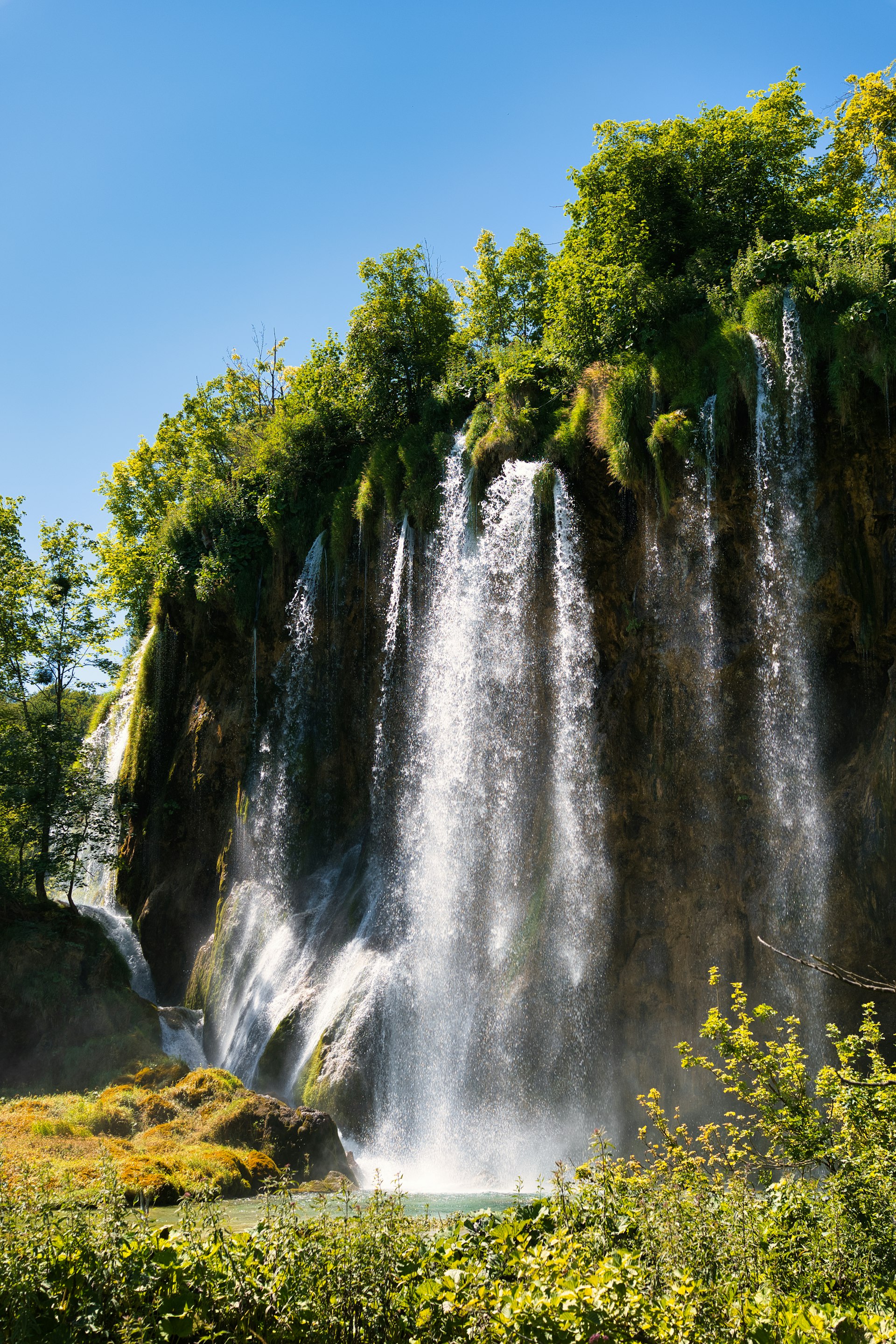
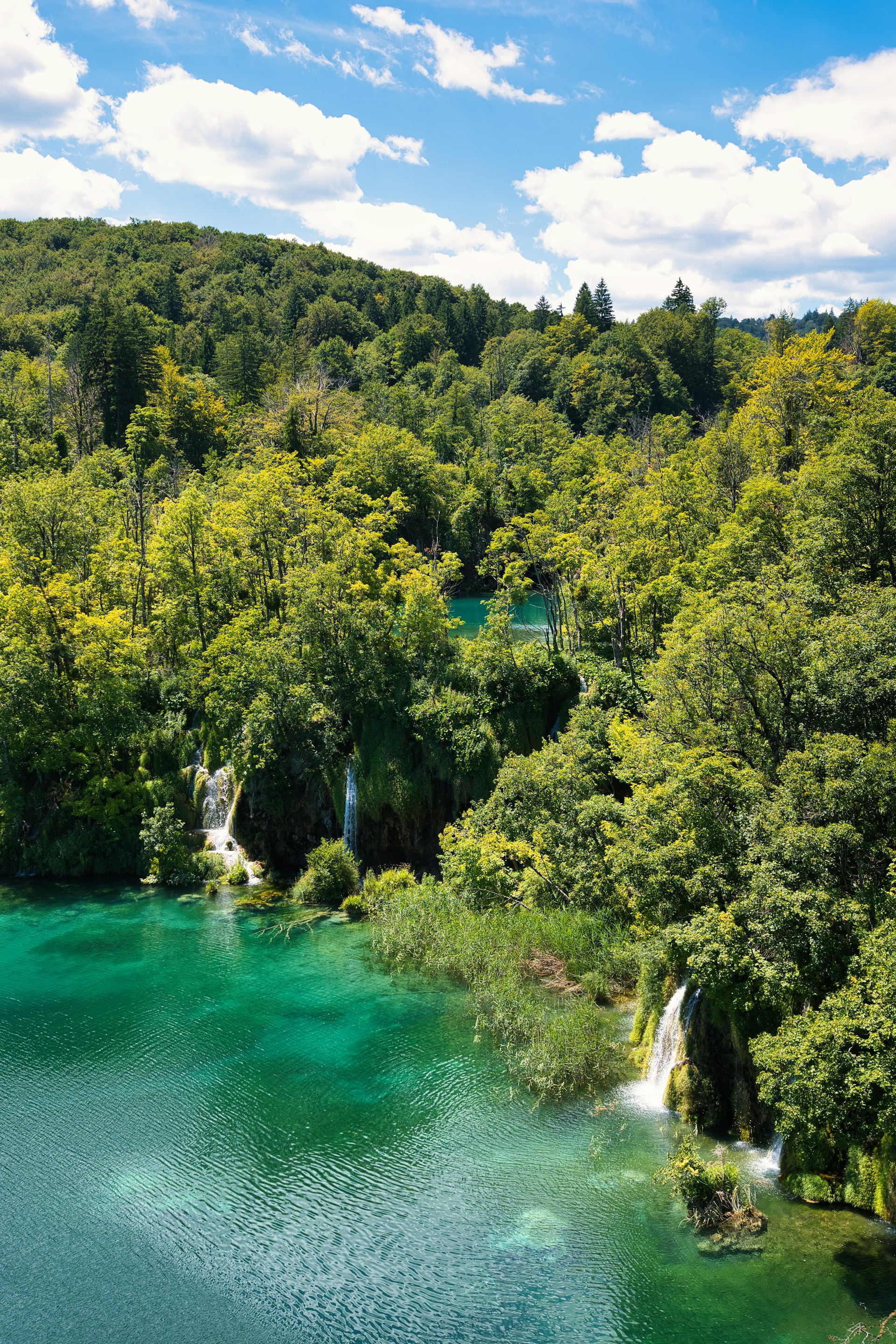
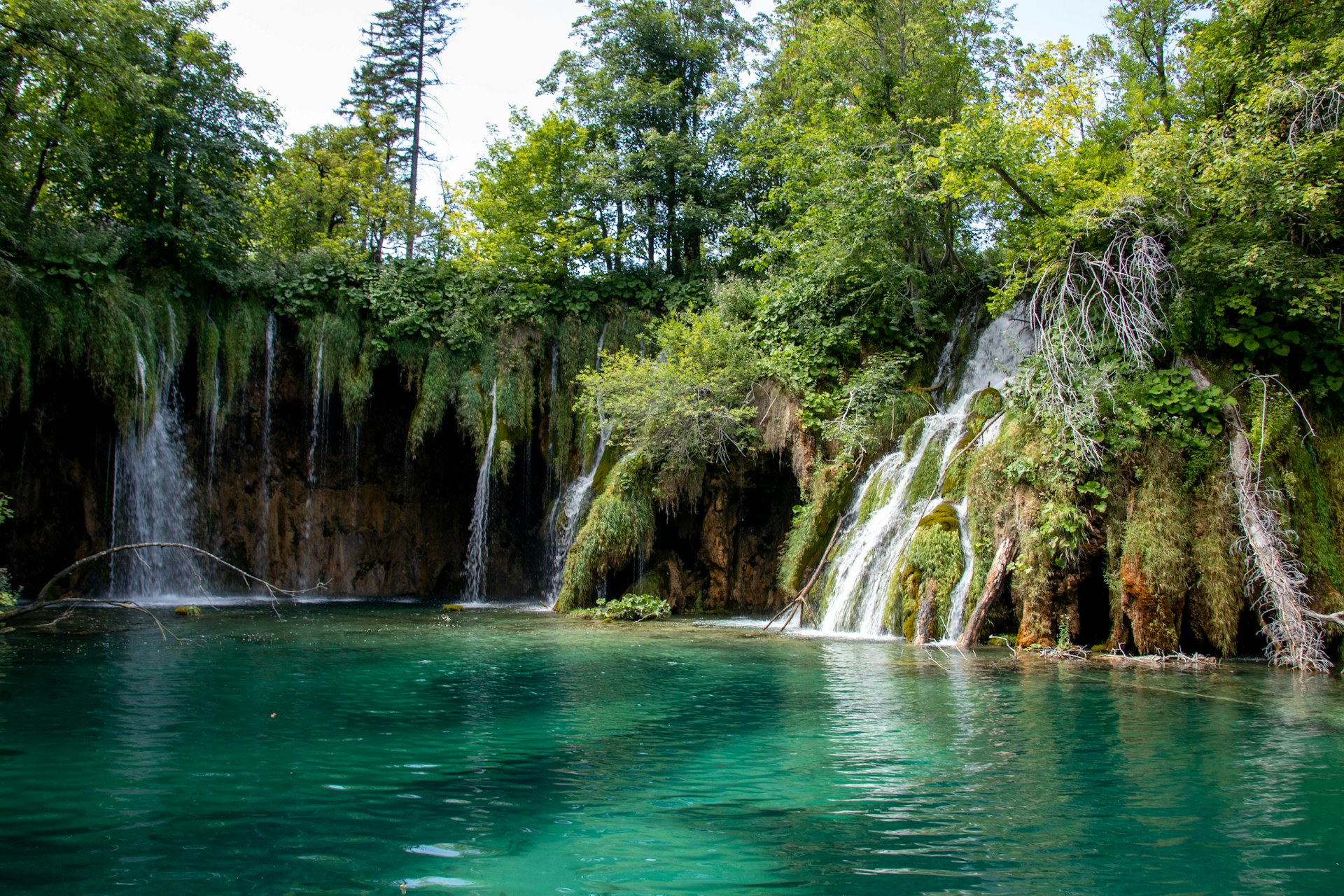
But peak season comes with trade-offs. Ticket prices hit their annual maximum of €40, daily visitor caps can mean sold-out time slots, and the famous boardwalks — especially around the Lower Lakes and Veliki Slap — can feel crowded from mid-morning to mid-afternoon. The good news: with smart planning, you can still have a spectacular experience.
This guide covers everything you need to navigate a summer visit to Plitvice Lakes: weather data, crowd strategies, the best routes and activities, photography tips, packing essentials, and practical recommendations to help you get the most out of the park's busiest season.
Weather & Climate in Summer (June–August)
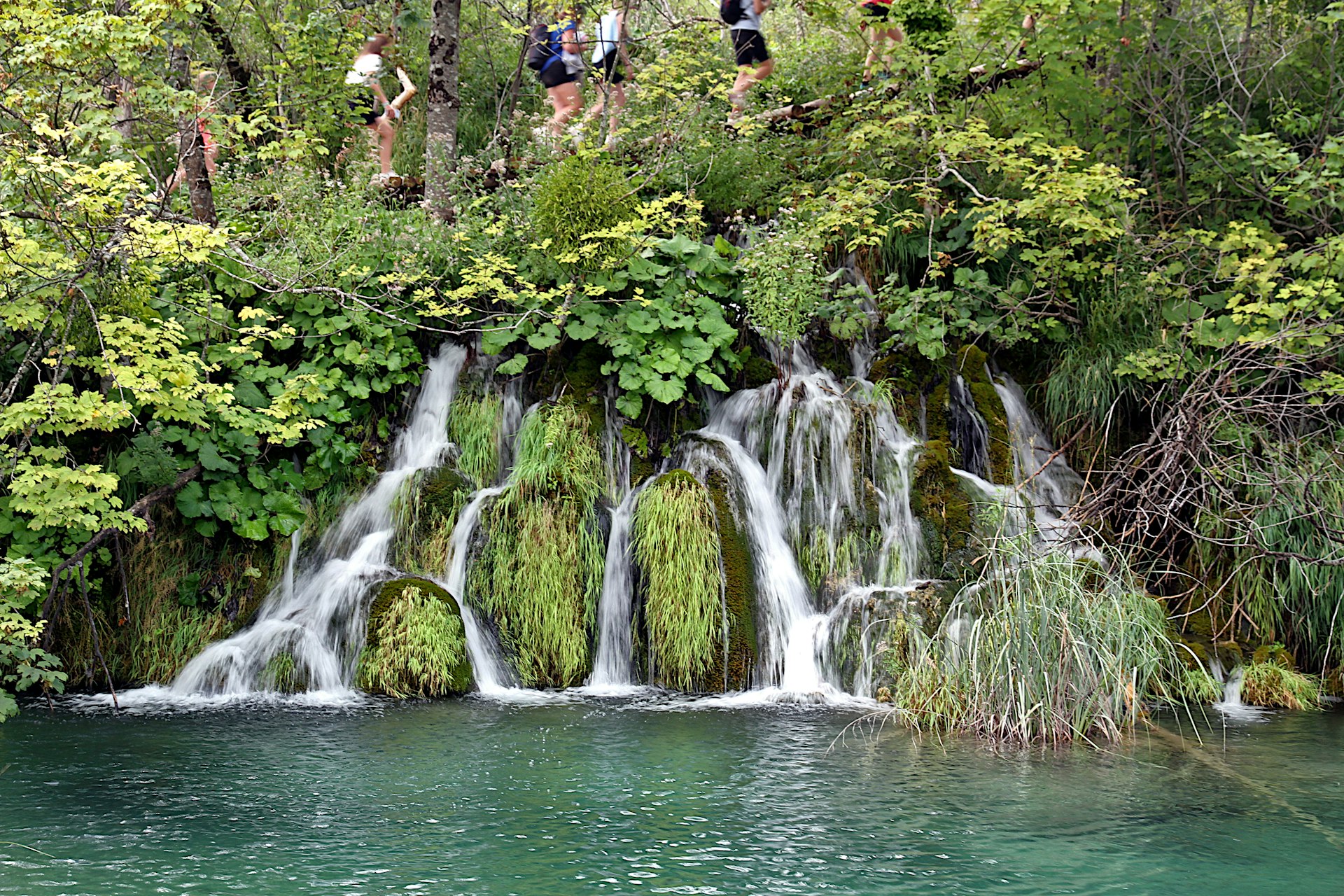
Plitvice Lakes sits inland at 500–640 meters elevation, so summer temperatures are more moderate than along the scorching Dalmatian coast — though it can still feel warm, especially in July and August. The continental-mountain climate means afternoon thunderstorms are possible throughout the season.
June
June is the gateway to summer and arguably the most pleasant month weather-wise. Average highs reach 24 °C (75 °F), with lows around 12 °C (54 °F) — comfortable for hiking without the oppressive heat of midsummer. Rainfall averages 90–100 mm spread across 11–13 days, mostly as afternoon thundershowers that clear quickly. Days are long, with sunrise around 5:15 AM and sunset after 8:45 PM, giving you ample time to explore.
July
July is the hottest month. Average highs climb to 27 °C (81 °F), occasionally spiking above 30 °C during heat waves. Lows hover around 14 °C (57 °F). Rainfall drops to about 75–85 mm across 9–11 days, but when storms hit, they can be intense. The park's forest canopy provides welcome shade, making the trails cooler than exposed areas. This is also peak tourist month, second only to August.
August
August matches July for heat, with average highs of 28 °C (82 °F) and lows of 14 °C (57 °F). It's the driest summer month, with rainfall around 70–80 mm over 8–10 days. However, August is the single busiest month of the year — European school holidays push visitor numbers to their annual maximum. Late August brings slightly thinning crowds and the first hints of cooler mornings.
Summary table:
| Month | Avg High | Avg Low | Rainfall | Daylight Hours |
|---|---|---|---|---|
| June | 24 °C | 12 °C | ~95 mm | ~15.5 hrs |
| July | 27 °C | 14 °C | ~80 mm | ~15.2 hrs |
| August | 28 °C | 14 °C | ~75 mm | ~14.0 hrs |
Crowds & Ticket Prices
Summer is the most expensive and most crowded time at Plitvice. Preparation is not optional — it's essential.
Ticket Prices (2026)
- June–August: €40 per adult — the highest tier. Children (7–17) pay €15; under-7s are free. Students with valid ID receive a discounted rate of €28.
- Two-day passes are available at a reduced rate and are worth considering if you want to explore both the Upper and Lower Lakes at a relaxed pace.
All tickets require a timed-entry reservation booked through the official park website. Summer slots — particularly morning entries between 8:00 and 10:00 AM — sell out days or even weeks in advance.
Crowd Levels
- June: High. The season ramps up quickly after June 1. Weekdays are more manageable than weekends, but don't expect solitude at any time.
- July: Very high. Tour buses arrive in waves from the coast. The Lower Lakes boardwalks can feel like a one-way conveyor belt between 10:00 AM and 3:00 PM.
- August: Very high — the busiest month. Daily visitor caps are regularly reached. If you haven't booked your timed-entry ticket in advance, you may be turned away.
Critical tip: Book your tickets at least one week ahead for summer visits, and two weeks ahead for August. Choose the earliest morning slot available (typically 7:00 AM) for the quietest experience.
What to See & Do
The Full Park Experience
Summer's biggest advantage is access: every trail, boardwalk, boat shuttle, and panoramic train is operational, and extended opening hours (7:00 AM to 8:00 PM) give you the most daylight of any season.
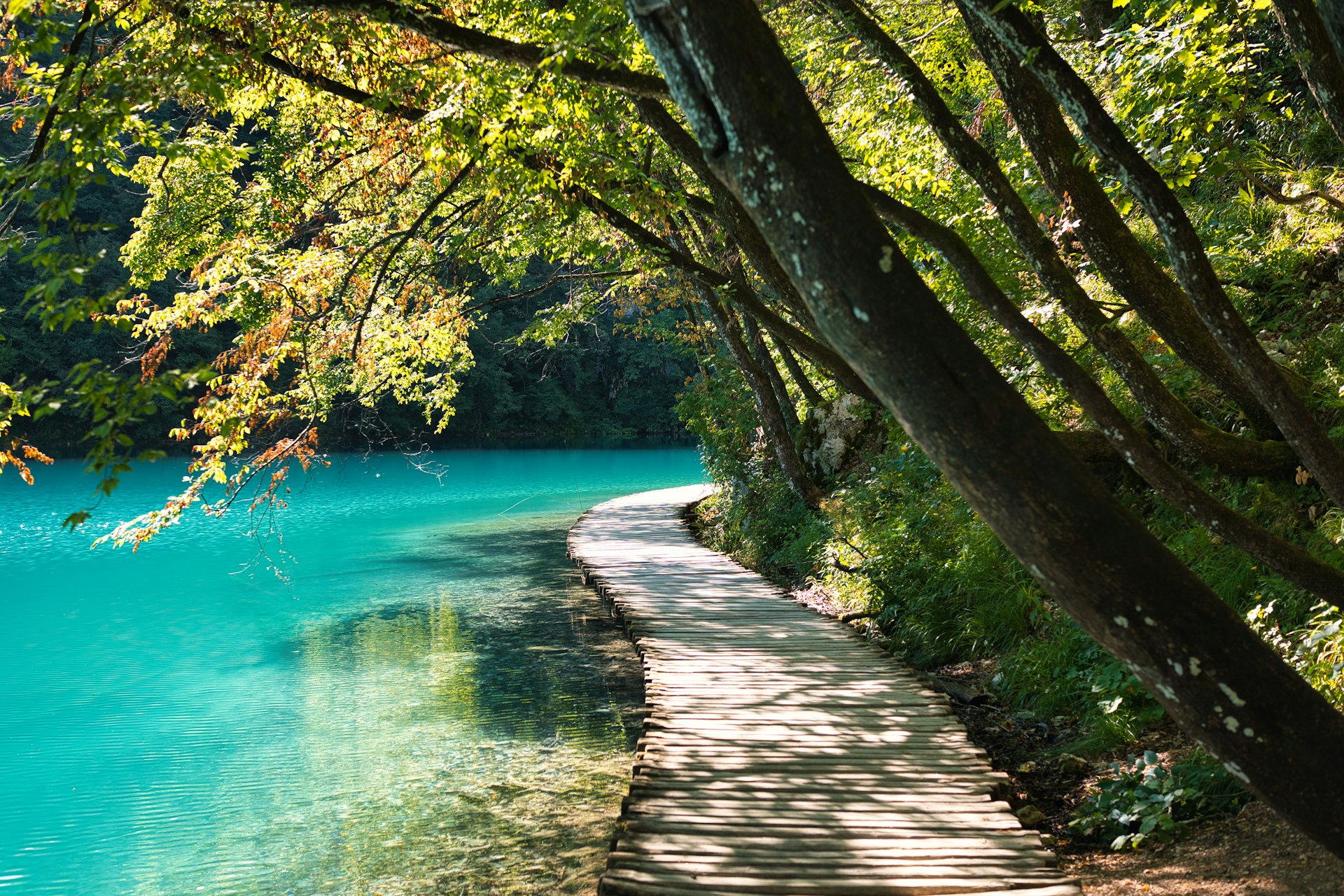
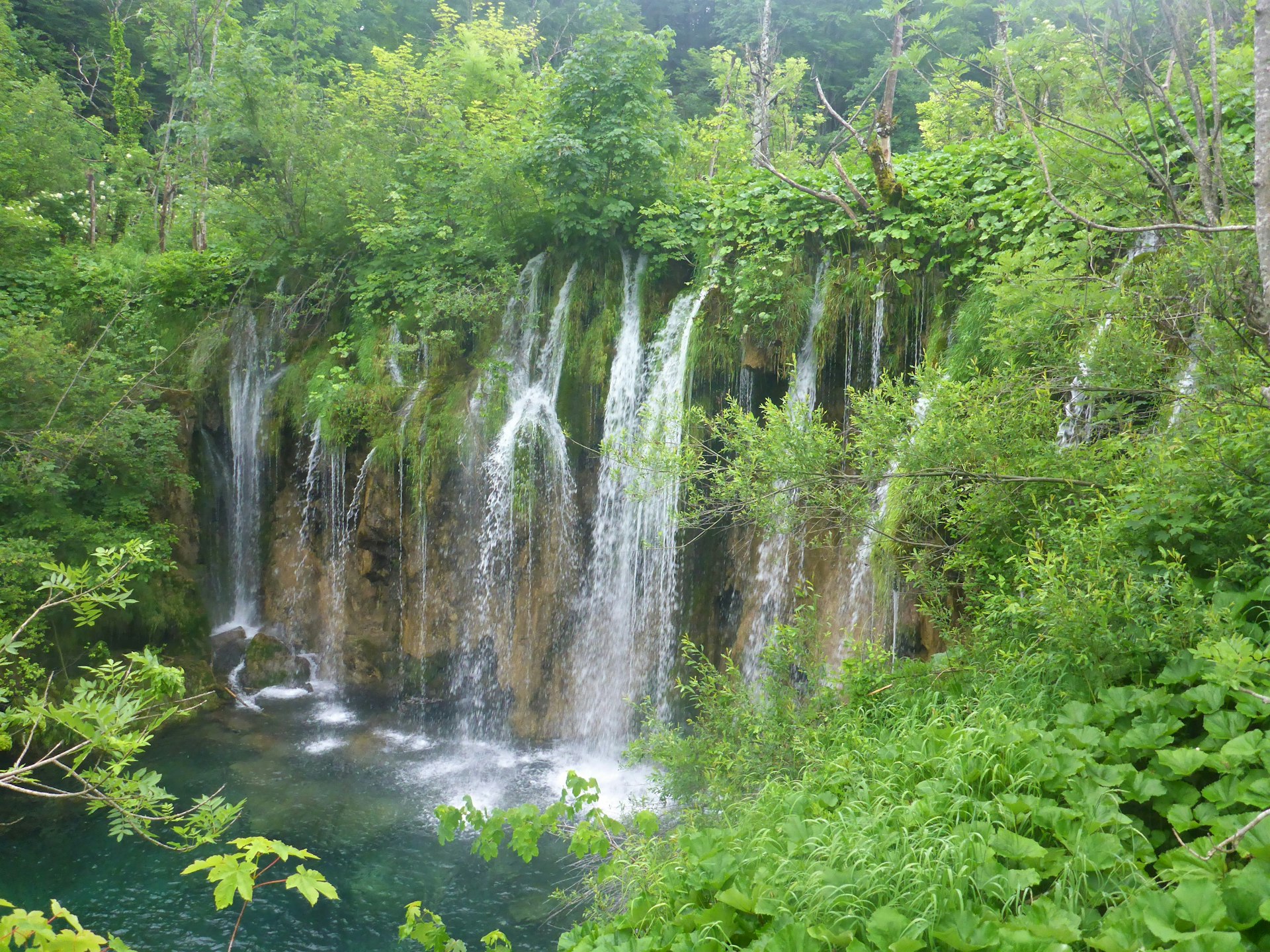
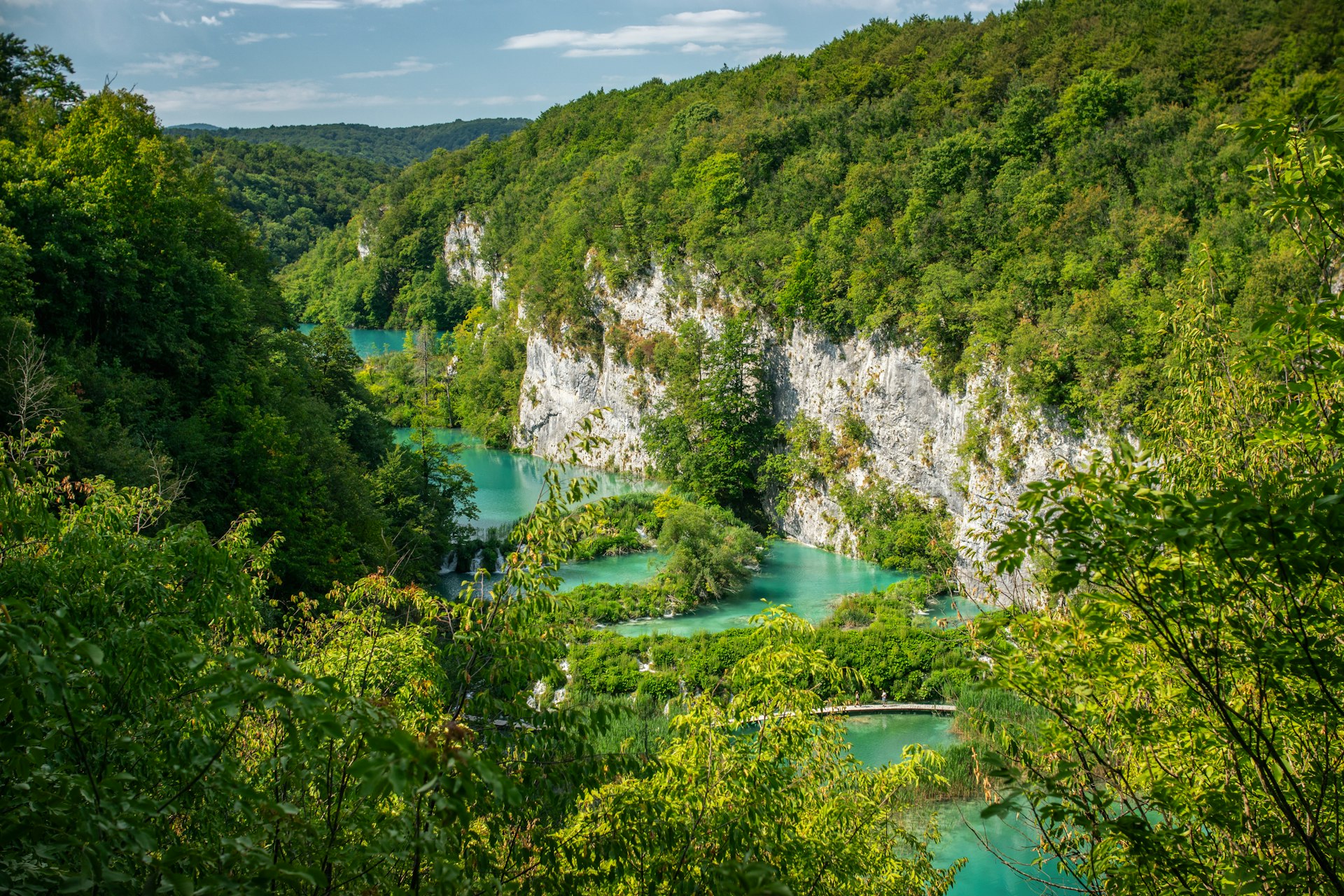
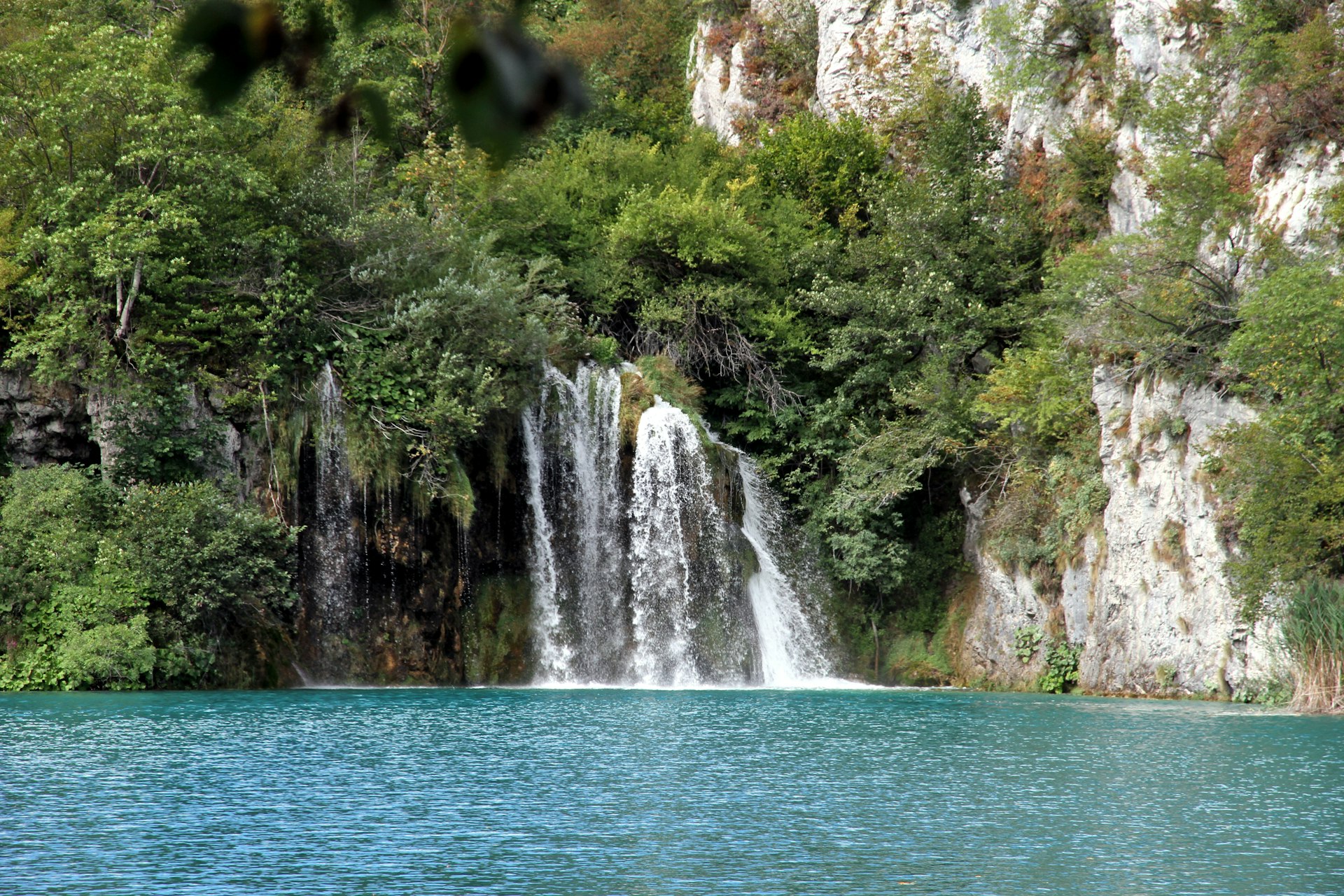
The Lower Lakes are the park's star attraction — a series of cascading pools connected by waterfalls and framed by moss-covered travertine barriers. The signature viewpoint overlooking the Lower Lakes canyon is the single most photographed spot in Croatia.
The Upper Lakes, often overlooked by rushed visitors, are equally beautiful in summer. Wider, calmer, and surrounded by old-growth beech forest, they offer a more serene experience, especially in the morning before the midday crowds arrive.
Beat-the-Crowds Strategy
The key to enjoying Plitvice in summer is timing. Here's a tested strategy:
- Book the earliest entry slot (7:00 AM). Enter at Entrance 2 and head directly to the Upper Lakes.
- Walk the Upper Lakes southward while most visitors are still arriving at Entrance 1 for the Lower Lakes.
- Take the boat across Lake Kozjak around 10:00–11:00 AM, when the Lower Lakes crowds are peaking.
- Explore the Lower Lakes in the early afternoon as tour groups begin to depart.
- End at Veliki Slap (the Great Waterfall) around 3:00–4:00 PM for smaller crowds and softer light.
Swimming — Where to Go Instead
Swimming is strictly prohibited in Plitvice Lakes. However, if the summer heat has you longing for a dip, the nearby Korana River at the village of Rastoke (about 30 minutes from the park) offers swimming spots with its own beautiful waterfalls. Mrežnica River, about an hour south, is another popular swimming and kayaking destination.
Evening Activities
If you're staying nearby, the area around the park offers pleasant summer evenings. The village of Rastoke — nicknamed "the small lakes of Plitvice" — features old watermills perched above waterfalls and is gorgeous at sunset. Several local restaurants serve traditional Lika cuisine: lamb roasted under a peka (bell-shaped lid), freshwater trout, and handmade štrukli (cheese pastry).
Photography Opportunities
Summer presents both advantages and challenges for photography at Plitvice.
Advantages:
- Golden hour magic — With sunrise before 5:30 AM and sunset after 8:30 PM, the golden-hour windows are generous. If you can access the park at opening, the low-angle morning light creates stunning effects on the turquoise water.
- Vibrant colors — The deep green of summer foliage contrasted against the turquoise lakes makes for vivid, saturated images without any post-processing.
- Clear water — Lower water levels in late summer mean the lakes are at their clearest, revealing submerged logs, fish, and the lake bed in extraordinary detail.
Challenges:
- Harsh midday light — Between 11:00 AM and 4:00 PM, overhead sun creates strong contrasts and washed-out highlights on the water. Avoid shooting waterfalls in direct midday sun.
- Crowds in your shots — Keeping boardwalks free of people is nearly impossible. Solutions: shoot at opening time, use long exposures (10+ seconds with an ND filter) to blur out moving people, or focus on tight compositions of water details and cascades.
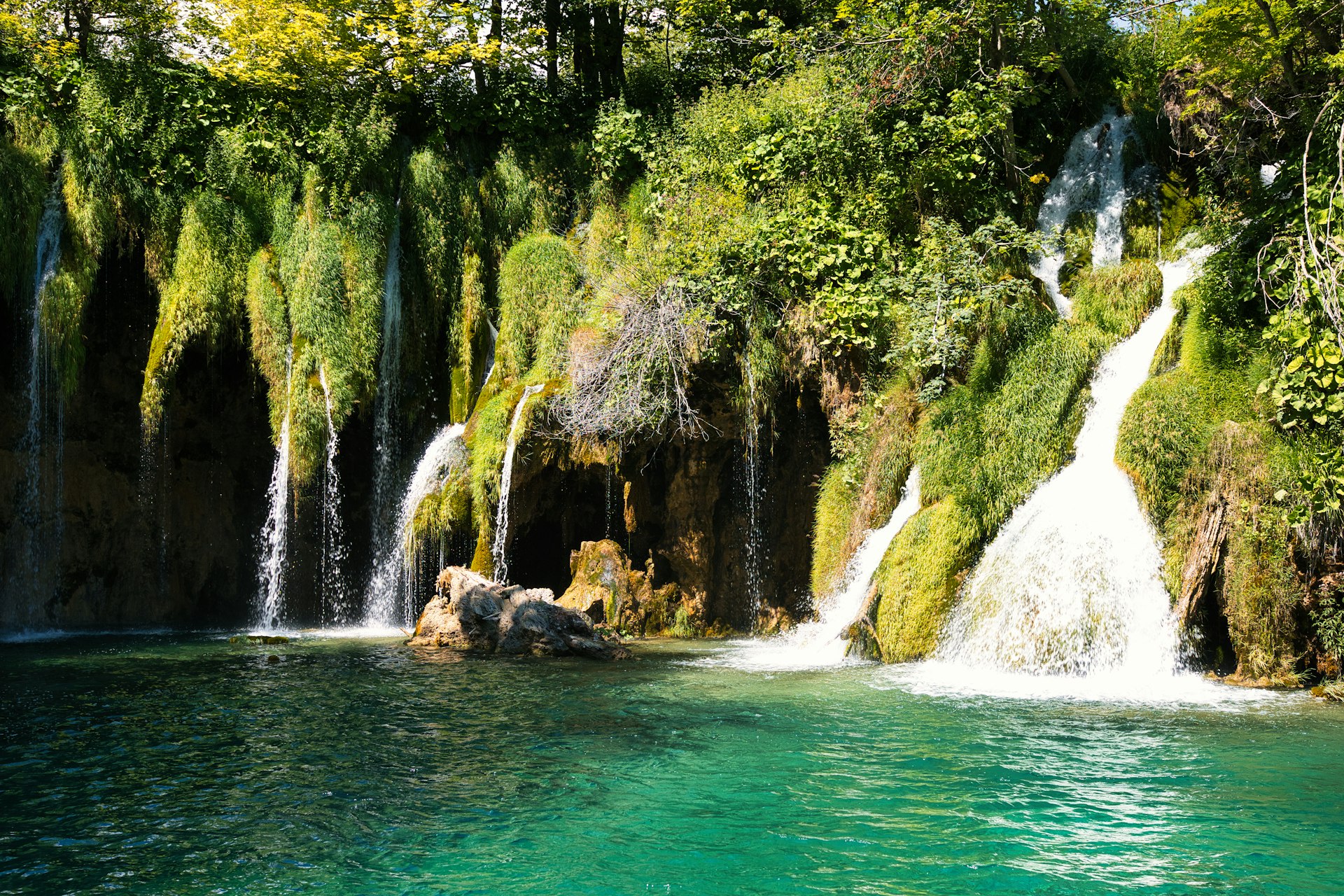
Best summer shots: The turquoise water of Lake Kozjak from the boat crossing, the panoramic overlook of the Lower Lakes canyon from the trail above Entrance 1, and close-ups of damselflies and butterflies on the boardwalk railings.
What to Wear & Pack
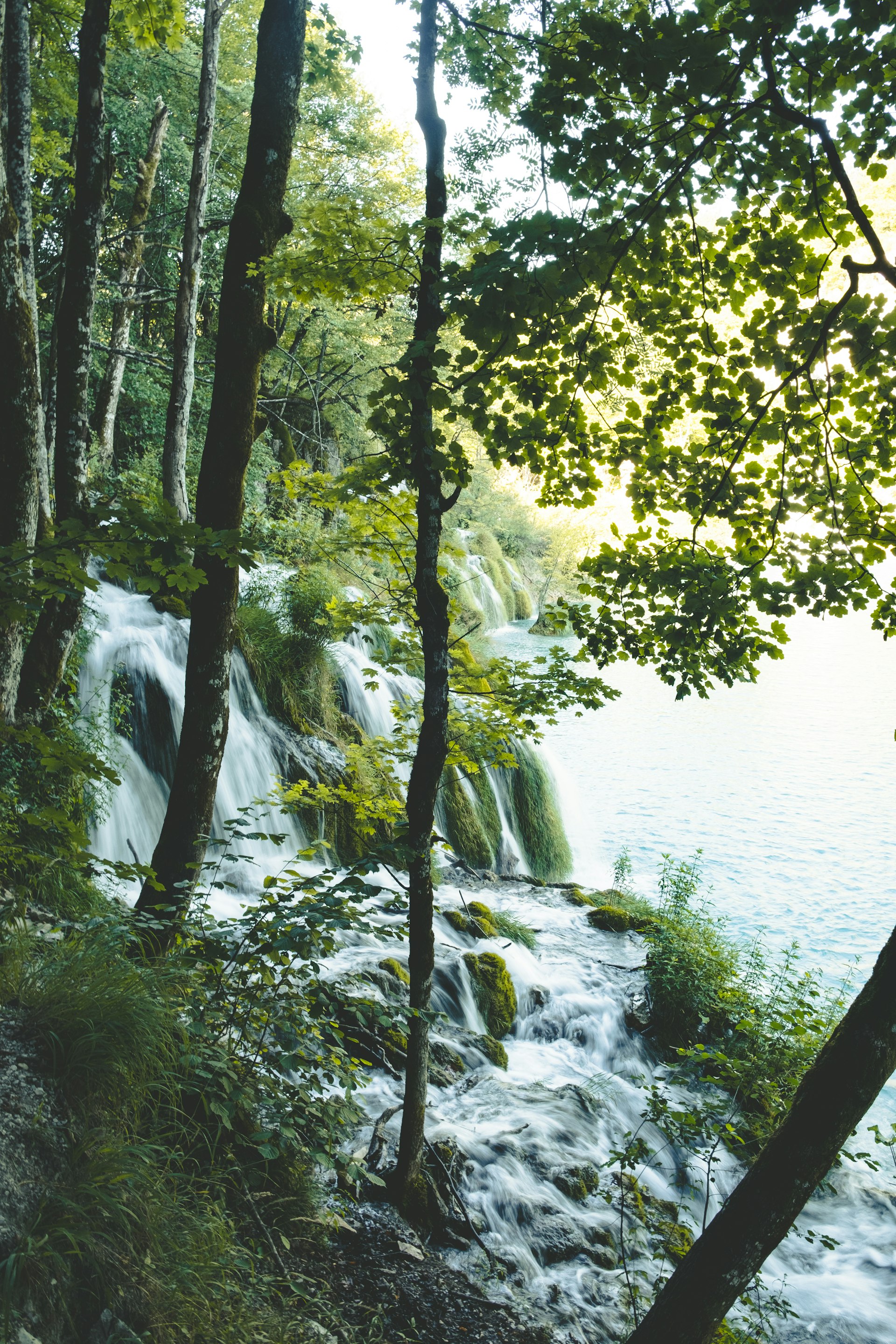
Summer at Plitvice is warm but you're in a forest with water everywhere — don't dress for the beach.
Clothing:
- Lightweight, moisture-wicking hiking clothes (avoid cotton, which stays damp)
- A light waterproof jacket or packable rain shell — afternoon thunderstorms appear without warning
- Comfortable walking shoes with good tread (sandals and flip-flops are a bad idea on wet boardwalks)
- A hat for sun protection on open stretches
- Swimwear if you plan to visit Rastoke or Korana River after the park
Gear:
- Sunscreen (SPF 30+) and sunglasses — essential, even in the forest
- Insect repellent — mosquitoes and gnats are active near the water in summer
- At least 1.5 liters of water per person (refill stations exist but are limited)
- Snacks or a packed lunch — park cafés are overpriced and have long queues in summer
- A portable phone charger if you'll be shooting photos all day
- ND filter for photographers who want long-exposure waterfall shots in daylight
Pros & Cons of Visiting in Summer
Pros
- Full access — every trail, boat, train, and facility is open
- Extended hours — park open 7:00 AM to 8:00 PM, maximizing your time
- Warm, pleasant weather — ideal for a full day of hiking
- Vibrant scenery — deep greens and vivid turquoise water
- Crystal-clear lakes — lower water levels mean exceptional clarity
- Convenient — fits easily into a broader Croatian coast itinerary
Cons
- Highest ticket prices — €40 per adult
- Severe crowding — especially July and August; boardwalks can feel congested
- Tickets sell out — must book well in advance
- Midday heat — temperatures can exceed 30 °C on hot days
- Reduced waterfall volume — late summer waterfalls are less impressive than spring
- Afternoon thunderstorms — sudden and sometimes intense
Tips & Recommendations
Book tickets immediately once you know your dates. Summer morning slots sell out fast. The official park website is the only legitimate booking platform — avoid reseller sites charging markups.
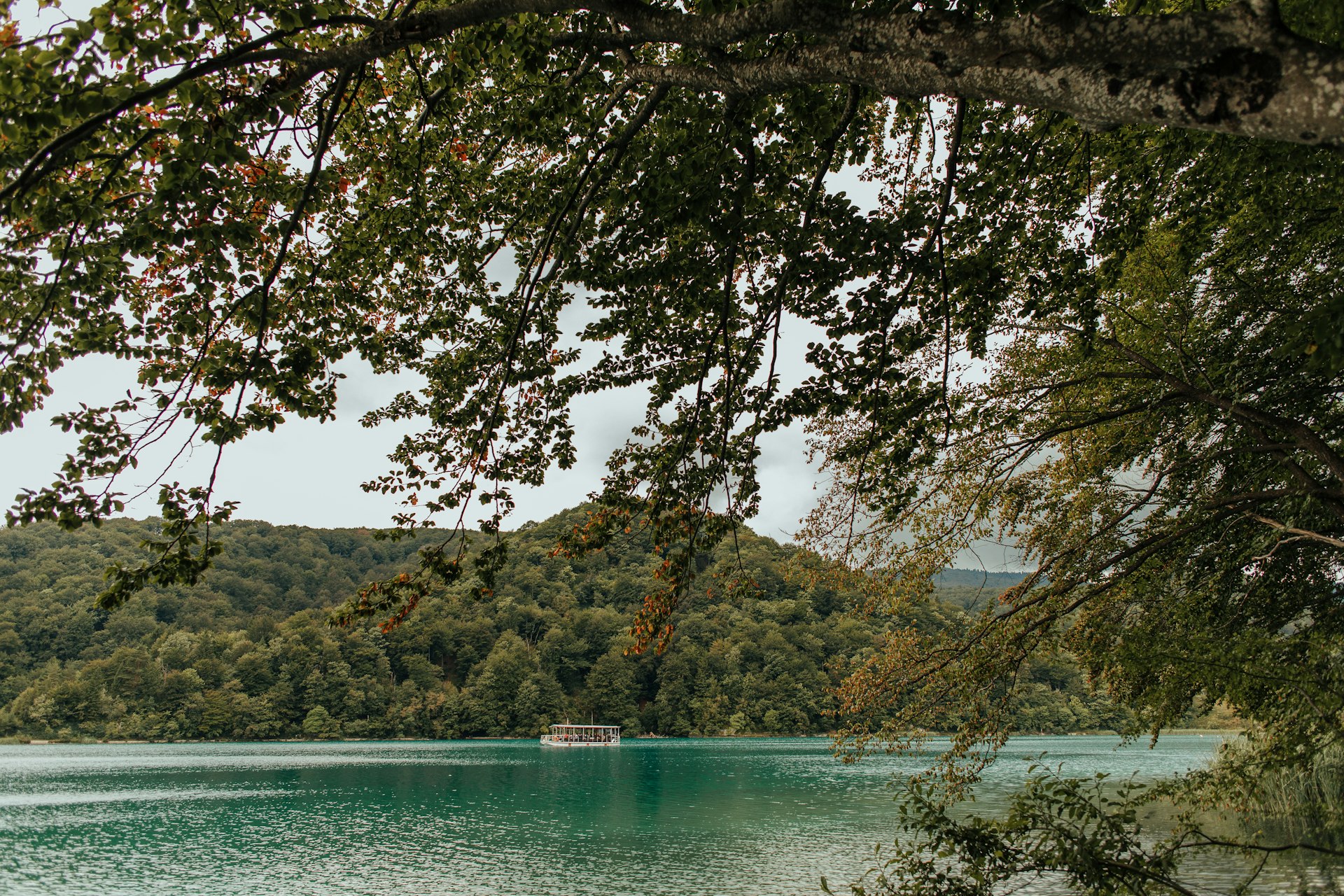
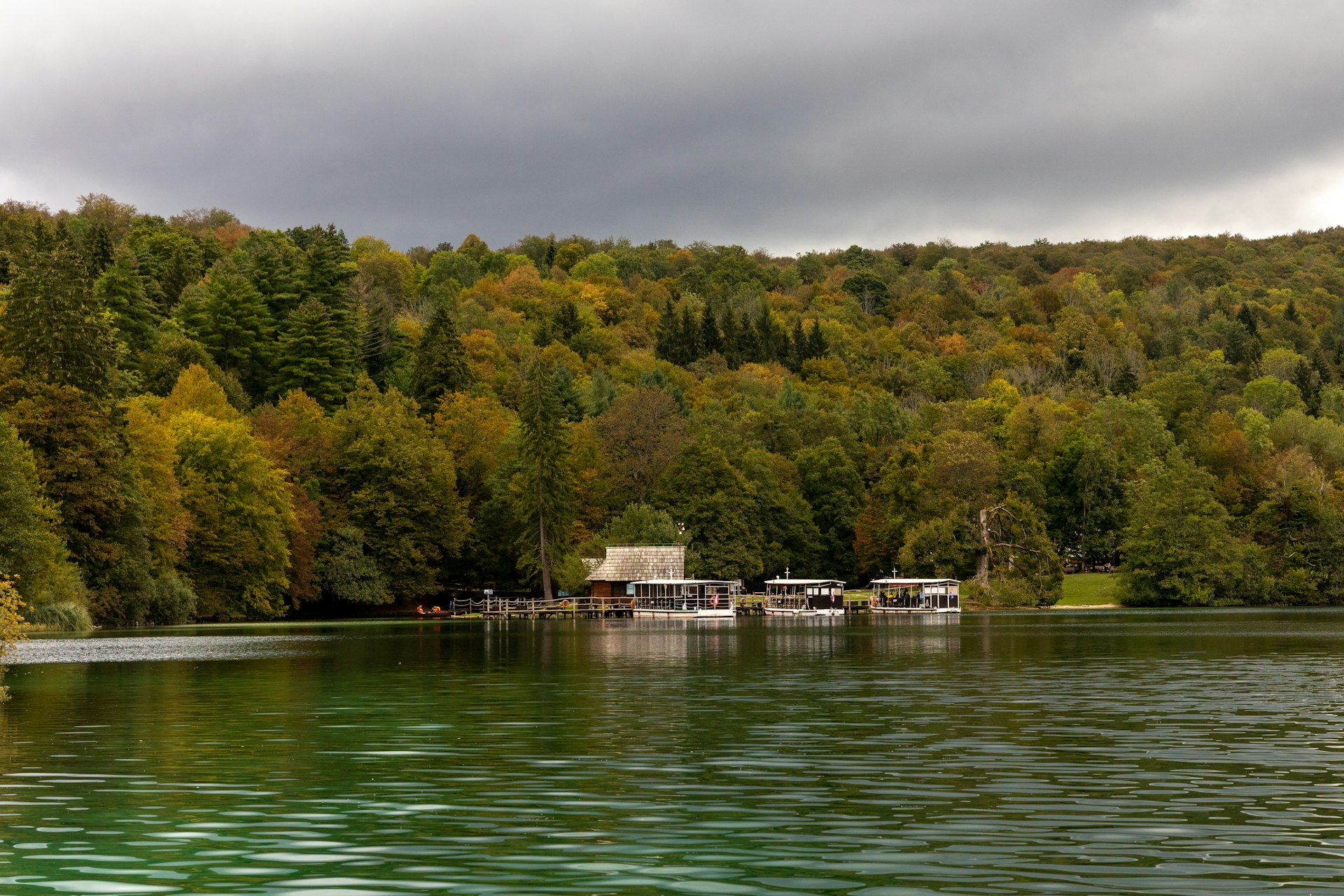
Electric boats ferry visitors across Lake Kozjak, the park's largest lake. Photo by Andries Combrink on Unsplash Arrive at 7:00 AM. This is the single most important piece of summer advice. The first two hours are dramatically quieter than mid-morning.
Use Entrance 2 to start with the Upper Lakes. The majority of tour buses and day-trippers funnel through Entrance 1 to the Lower Lakes. Going against the flow gives you a head start.
Carry plenty of water. The combination of heat, hiking, and limited water refill points catches visitors off guard. 1.5–2 liters per person is a safe minimum.
Don't try to rush it. Budget at least 5–6 hours for a satisfying visit. The full park circuit (Route K) takes 6–8 hours but covers everything.
Consider a two-day ticket if you want a leisurely experience. Day one for the Upper Lakes, day two for the Lower Lakes — no rushing, no FOMO.
Watch the weather radar before entering the park. Summer thunderstorms are common and can be intense. The boardwalks become extremely slippery when wet, and lightning is a genuine safety concern in exposed areas.
Stay in the Plitvice area (Rastoke, Slunj, or guesthouses along the D1) rather than day-tripping from Split or Zadar. The drive is 2+ hours each way, and arriving at 7:00 AM from the coast means a brutal early start.
Frequently Asked Questions
Is summer the best time to visit Plitvice Lakes?
Summer offers the most complete experience — full access, warm weather, and long days — but it's also the most crowded and most expensive. If you don't mind crowds and plan ahead, summer is excellent. If you prefer solitude, spring or autumn may suit you better.
Can I visit Plitvice as a day trip from Split or Dubrovnik?
From Split, yes — it's about 2.5 hours each way. From Dubrovnik, it's a 4.5-hour drive, making it an exhausting day trip. An overnight stay near the park is strongly recommended regardless of your starting point.
How far in advance should I book summer tickets?
At least one week, ideally two weeks for July and August. If your travel dates are fixed, book as soon as the booking window opens. Morning time slots are the first to sell out.
Will the waterfalls be impressive in summer?
They're still beautiful, but water volume is noticeably lower in July and August compared with spring. The lakes themselves are at their most visually stunning (clearest turquoise), but the cascades are gentler. June still has good waterfall flow from late spring rains.
Are there any summer events at Plitvice?
The park itself doesn't host events, but the surrounding region has traditional festivals and cultural events throughout summer. Check local tourism boards for listings. Nearby Rastoke hosts craft fairs and food festivals periodically.
Is it safe to visit during a thunderstorm?
The park remains open during light rain, but rangers may close certain sections during severe electrical storms. Boardwalks become very slippery when wet. If you hear thunder, move away from the exposed lakeside areas and seek shelter at one of the park's rest stops or covered areas near the entrances.